
Best Ethical Home Decor Brands: 2026 Australian Guide

Table of Contents
- What Makes Ethical Home Decor Worth the Investment
- Quick Comparison: Ethical Home Decor Pieces at a Glance
- How to Spot Authentic Handcrafted Inlay Furniture
- Ethically Sourced Bone Inlay: What to Ask Before You Buy
- Authentic Mother-of-Pearl Inlay and Sustainable Furniture Materials
- Price Ranges and Value Over Time
- A Practical Buyer's Checklist for Ethical Home Decor
- Conclusion
- Frequently Asked Questions
Last Updated: October 18, 2026
What Makes Ethical Home Decor Worth the Investment
Ethical home decor is furniture and homewares made with verified material sourcing, fair artisan working conditions, and a product lifespan measured in decades rather than seasons.
Mass-produced furniture hides its supply chain behind intermediaries.
Below, we break down what separates genuine ethical homewares from marketing language, how to verify claims, and which pieces justify their price over a decade of use.
Quick Comparison: Ethical Home Decor Pieces at a Glance
Here is a side-by-side view of handcrafted inlay pieces across price points, so you can match a piece to your space and budget.
| Piece | Material | Price (AUD) | Best For |
|---|---|---|---|
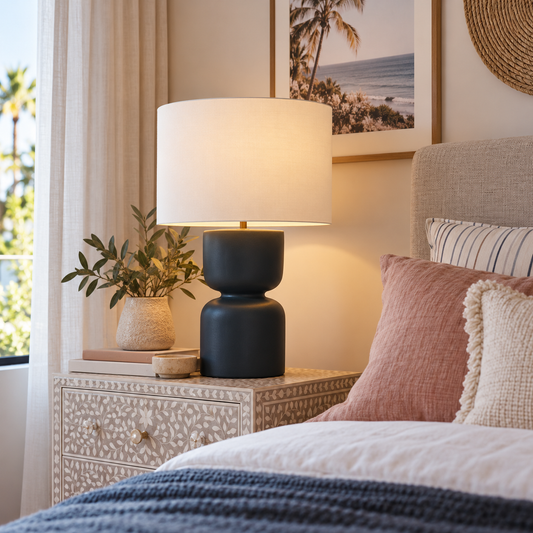
| Bone Inlay Waterfall Console : Stripe : Grey | Ethically sourced bone, resin, timber | $2,299 | Entryways and hallways |
| Bone Inlay Buffet : Arches : Indigo | Bone, resin, solid timber frame | $3,690 | Dining and living storage |
| Mother of Pearl Inlay Plinth : Floral : White | Abalone shell inlay | $1,690 | Sculptural side table or display |
| Bone Inlay Coffee Table : Pinstripe : Charcoal | Bone inlay, antique brass legs | $1,690 | Living room centrepiece |
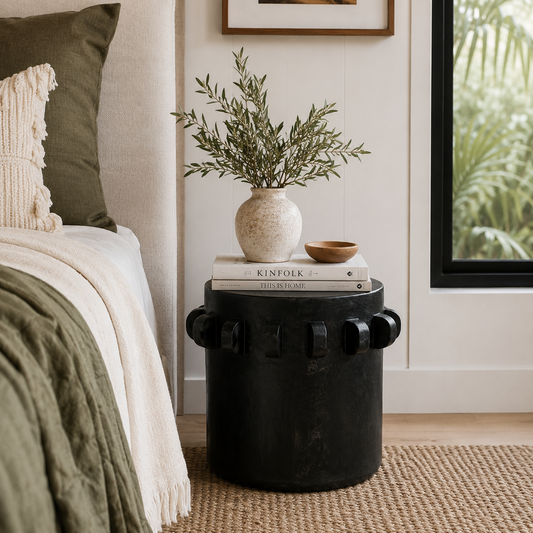
| Stack Timber Sculptural Stool or Side Table | Solid timber | $590 | Compact side table or stool |
| Bone Inlay Rectangular Tray : Moroccan : Grey | Responsibly sourced bone | $450 | Consoles and dining displays |
| Mother of Pearl Rectangular Tray : Floral : White | Abalone shell | $290 | Vanities and coffee tables |
| Bone Inlay Wall Hook : Abela : Black | Ethically sourced bone | $55 | Hallway and bedroom storage |
| Wood & Bone Napkin Rings (Set of 6) | Wood and cow bone | $46 | Table settings and gifting |
The range runs from small accessories under $100 to statement furniture above $3,000, so renters and renovators can start small and scale up later.

How to Spot Authentic Handcrafted Inlay Furniture
Authentic handcrafted inlay furniture shows irregularity. Machine-printed patterns repeat perfectly. Hand-cut bone and shell never do.
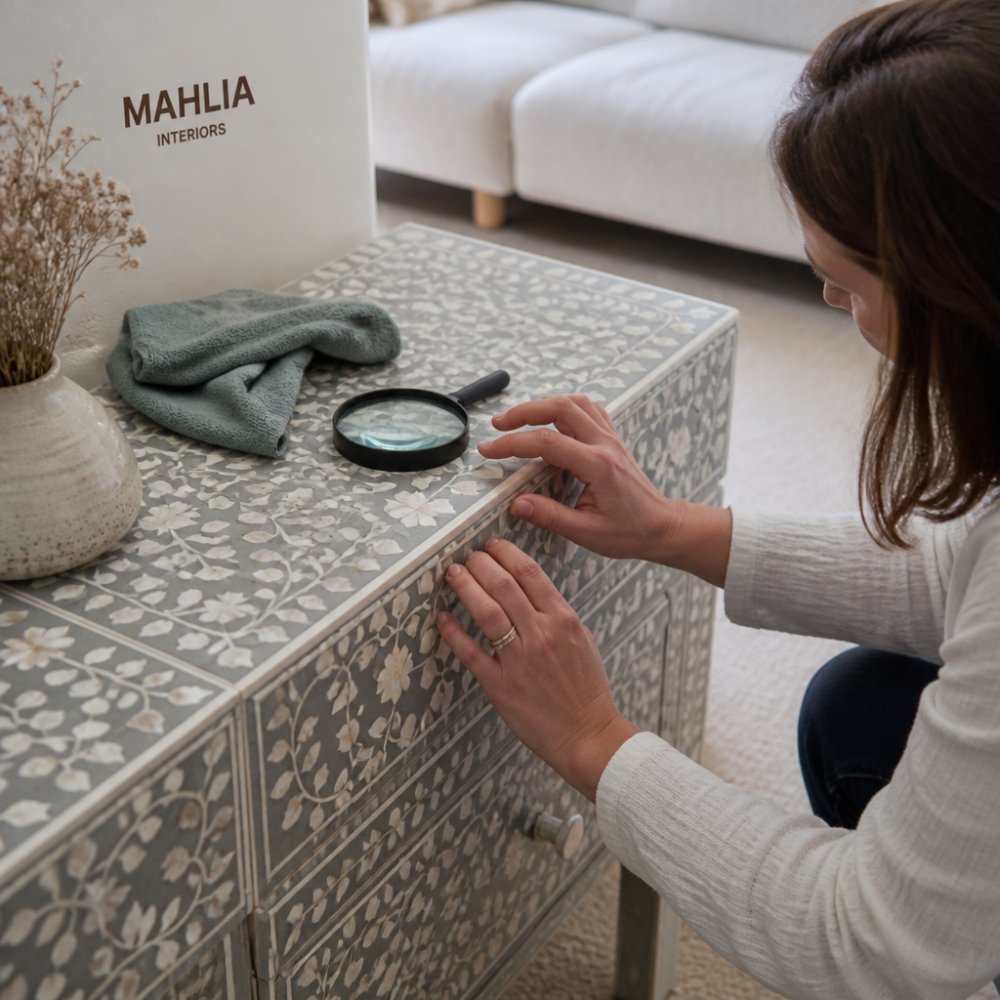
Look for these signals before you buy:
- Visible seams between pieces. Each bone or shell fragment is cut and set individually, so tiny gaps and slight height differences are normal.
- Colour variation across the surface. Natural bone shifts from cream to pale grey. Shell catches light differently at every angle.
- Weight and density. Solid timber frames feel heavier than particleboard imitations.
What most guides miss is the reverse test. If a piece looks flawless and identical to the product photo, be suspicious. Handmade means variation, and reputable makers say so openly.
Ethically Sourced Bone Inlay: What to Ask Before You Buy
Ethically sourced bone inlay comes from animals not killed for their bones, in practice, cow bone collected as a food-industry by-product, then cleaned and prepared for craft use.
Ask suppliers these questions:
- Where does the bone originate, and is it a food-industry by-product?
- Can you provide documentation or a supplier declaration?
- Which workshop finishes the pieces, and how are artisans paid?
- Is the resin finish low-emission or solvent-based?
A supplier who answers clearly and quickly is usually telling the truth; vague answers about "ethical partners" are a red flag.
This is where the best ethical home decor brands in Australia separate themselves.
Authentic Mother-of-Pearl Inlay and Sustainable Furniture Materials
Authentic mother-of-pearl inlay uses real shell, cut and set by hand, not resin printed to imitate iridescence. The finish should shift colour as light moves across it.
Sustainable furniture materials fall into a few practical categories:
- Reclaimed or responsibly harvested timber for frames and legs
- Shell and bone by-products from food and fishing industries
- Low-VOC resins and finishes that reduce indoor emissions
For buyers weighing a greener home, the material question matters more than the marketing. A solid timber frame with a hand-set shell surface will outlast three flat-pack equivalents.
Our Mother of Pearl Rectangular Tray : Floral : White uses ethically sourced abalone shell, individually cut and set by artisans, the same material discipline we apply to full-sized furniture.

Price Ranges and Value Over Time
Handcrafted inlay furniture typically sits above mass-market pricing because of labour hours, not markup. A single console can take days of cutting, setting, and finishing by hand.
Our pieces range from $46 for a set of handcrafted napkin rings to $3,690 for a bone inlay buffet. The question is not whether that costs more than a flat-pack alternative.
The labour behind the price
Inlay work is slow by design: each fragment of bone or shell is cut, shaped, and set individually, and a console with a dense geometric pattern can contain thousands of pieces. You are paying for hours of skilled handwork, not a brand name.
When you compare quotes, ask how many hours of handwork a piece involves.
Cost per use, not sticker price
A more useful comparison than sticker price is cost per use. A $2,299 console used daily for fifteen years works out to roughly 42 cents per day; a $400 flat-pack that fails after three years costs about 36 cents per day but ends up in landfill, and you buy again.
Smaller pieces make the same maths accessible: a $290 mother-of-pearl tray used daily for a decade costs about 8 cents per day, and a $55 wall hook used for twenty years costs less than a cent per day.
What drives long-term value
Three factors separate pieces that hold value:
- Repairability. Solid timber frames can be refinished. Resin surfaces can be spot-cleaned. Flat-pack board cannot be repaired once it swells. Ask whether the finish can be touched up and whether replacement parts are available.
- Timeless design. Geometric and floral inlay motifs do not date the way trend-driven finishes do. A piece that looks current in ten years is a piece you will not replace.
- Resale and inheritance. Well-made artisan furniture holds desirability, which mass-produced pieces rarely do. Solid construction and hand-set inlay are the features buyers look for in second-hand furniture.
Durability expectations by material
Different materials age differently, so plan accordingly.
Bone Inlay Waterfall Console : Stripe : Grey →
- Solid timber frames can last decades if kept dry and out of direct sun. Joints may need tightening over time, but the structure remains sound.
- Bone inlay surfaces are durable when sealed, but they can chip if struck hard. Small chips are repairable by a furniture restorer.
- Mother-of-pearl inlay is more delicate than bone. It resists wear but can scratch, so it suits trays, display surfaces, and low-traffic pieces rather than dining tables.
Repairability and end-of-life
A piece that can be repaired stays out of landfill. Before you buy, ask whether the maker offers repairs, whether the finish can be restored, and whether the piece can be disassembled for recycling or donation.
For renters, smaller pieces make more sense: a $55 wall hook or $290 tray delivers the same craftsmanship without a permanent commitment and moves house easily.
A Practical Buyer's Checklist for Ethical Home Decor
Most ethical shopping guides give you a list of questions. This one explains what a good answer looks like, so you can tell a verified claim from a vague one.
1. Material origin and traceability
Ask where every material comes from and whether it is a by-product. Bone inlay should use cow bone collected as a food-industry by-product, not from animals killed for their bones; mother-of-pearl should use abalone or similar shell collected as a fishing by-product.

A good answer names the region and supplier; a weak answer says "ethically sourced" without detail. Ask for a supplier declaration in writing. Certification is helpful but not essential, a documented, named supply chain tells you more than a logo.
2. Workshop and labour conditions
Ask which workshop or region produced the piece and how artisans are paid. A good answer names the workshop and describes the payment structure, per piece or by the day, and whether they work in a registered facility.
If the maker cannot tell you who made the piece, treat that as a red flag. Traceability is the foundation of every other ethical claim.
3. Certification and standards
Certifications vary in scope. Ask what a certification actually covers: materials, labour, emissions, or all three. A timber certification says nothing about worker welfare, and a fair-trade certification says nothing about finishes.
A good answer explains the standard and what it verifies. A weak answer flashes a logo without explanation. Treat certification as one input among several, not a substitute for a named supply chain.
4. Frame and finish materials
Check the frame material: solid timber, not particleboard. Ask about the finish type and care restrictions, low-VOC resins and finishes reduce indoor emissions, which matters for bedrooms and living areas. A good answer names the finish and explains how to clean it; a weak answer says "natural finish" without specifics.
5. Real photos and natural variation
Ask for real photos of the actual item, not just studio renders. A good seller shows a finished piece from the same batch and explains what variation to expect; a weak seller insists every piece is identical, which signals machine production.
6. Lead times and damage policy
Custom pieces typically run on a longer timeline than in-stock items. Confirm lead times before you plan a renovation around delivery, and ask what happens if the piece arrives damaged. A good answer explains the process for repairs or replacements. A weak answer is vague about timelines and responsibility.
7. Returns and care
Verify the return policy in writing. Ask how the piece should be cleaned and whether humidity affects it, bone and shell inlay can be sensitive to prolonged moisture, so a maker who explains care clearly understands their materials.
8. Packaging and end-of-life
Ask whether packaging is recyclable or low-waste, and whether the maker offers repairs or take-back at end of life. A good answer explains repairability and disposal options; a weak answer has not considered end-of-life at all.
Quick verification table
| Claim | What a good answer looks like | What a weak answer looks like |
|---|---|---|
| Material origin | Named region and supplier, by-product confirmation | "Ethically sourced" with no detail |
| Labour | Named workshop, payment structure explained | "Ethical partners" with no names |
| Certification | Standard explained, scope clarified | Logo shown without explanation |
| Frame | Solid timber specified | "Wood" or "engineered wood" |
| Finish | Solvent type named | "Natural finish" |
| Photos | Real piece from same batch shown | Only studio renders |
| Lead time | Specific timeline and damage policy | Vague or evasive |
| End-of-life | Repair or take-back offered | Not considered |
Custom pieces typically run on a longer timeline than in-stock items, so confirm lead times before you plan a renovation around delivery.
Conclusion
The hardest part of buying ethical home decor is not finding beautiful pieces. It is verifying the claims behind them.
At Mahlia Interiors, every piece is individually handcrafted using 100% ethically sourced materials, with custom inlay design available for pieces tailored to your space.
Shop our new arrivals and start with a piece that fits your space today.
Frequently Asked Questions
What are some ethical home decor brands in Australia?
Look for brands that can explain where their materials come from and how pieces are made. Mahlia Interiors, for example, uses ethically sourced bone and mother-of-pearl inlay in handcrafted furniture and homewares, with pieces made by artisans in Rajasthan. Ask for material traceability, care guidance and realistic lead times (custom orders typically take 6-8 weeks from deposit) before committing.
How can I tell whether home decor is ethically made?
Ask three questions: where the raw materials come from, who makes the piece, and what happens at end of life. Genuine ethical home decor brands will answer without hesitation and provide documentation on request. Check for certifications where relevant, and look for signs of handcraftsmanship such as slight variations in inlay patterns, which indicate artisan work rather than mass production.
How can I check whether bone or mother-of-pearl inlay is ethically sourced?
Request written confirmation of the source. Ethically sourced bone inlay typically comes from cow bone, a by-product of the food industry, not from animals raised for their bone. For mother-of-pearl, ask whether the shell is a by-product of pearl farming or food harvesting. Reputable brands will explain their supply chain and provide documentation rather than relying on vague marketing claims.
What materials are considered sustainable for home decor?
Sustainable furniture materials include solid timber from responsibly managed forests, reclaimed wood, ethically sourced bone, mother-of-pearl and abalone shell by-products, and natural textiles such as linen and hemp. Look for durable construction and repairability, as a piece that lasts decades has a lower carbon footprint than one replaced every few years. Avoid materials with unclear origins or heavy chemical finishes.
How do I care for bone inlay and mother-of-pearl pieces in a humid climate?
Wipe surfaces with a soft, dry cloth and avoid abrasive cleaners or soaking. Keep pieces out of direct sunlight and away from moisture to preserve colour depth and prevent warping. Use coasters and placemats to protect resin surfaces, and clean spills promptly. In humid conditions, good ventilation and avoiding placement near open windows or bathrooms will help maintain the integrity of the inlay over time.