
Fair Trade Home Decor for Beginners: A Guide

Table of Contents
- What Fair Trade Home Decor Actually Means
- How to Identify Fair Trade Products When Shopping
- Ethical Home Decor Questions to Ask Before You Buy
- Eco-Friendly Decorating Ideas for Every Room
- Understanding Handcrafted Inlay Furniture and Its Value
- Building Your Fair Trade Home on a Real Budget
- Caring for Fair Trade Pieces Long-Term
- Frequently Asked Questions
Last Updated: October 10, 2026
What Fair Trade Home Decor Actually Means
Fair trade home decor guarantees ethical production: artisans receive fair wages, work in safe conditions, and have a say in their communities' development. When you buy fair trade home decor, you're supporting real people, not just purchasing an object.
At Mahlia Interiors, every piece uses 100% ethically sourced materials and direct collaboration with artisan communities. The difference between fair trade and mass-produced decor is traceability, transparency, and genuine partnership.
Fair trade also means environmental responsibility. Artisans using traditional techniques with natural materials have minimal environmental impact, and pieces last decades, not seasons.
How to Identify Fair Trade Products When Shopping
The challenge with fair trade home decor is that anyone can claim it. Here's how to separate genuine ethical sourcing from marketing speak.
Understanding Fair Trade Certifications
Third-party certifications are your most reliable starting point. The main bodies you'll encounter are:
Fair Trade International (FTI) audits producer organisations, ensuring workers receive minimum prices, work in safe conditions, and have a voice in business decisions.
World Fair Trade Organization (WFTO) certifies entire enterprises rather than individual products, auditing fair wages, safe conditions, environmental responsibility, and community development, a stronger signal for artisan-made goods.
Craft and Design certifications vary in rigour. Ask what auditing process backs the certification and how often it's renewed.
Can the brand show you the certification document or a link to the certifying body's registry? Legitimate producers display certification numbers for independent verification. If they can't, that's a red flag.
Beyond the Label: Questions That Reveal Truth
Where do the raw materials come from? A credible answer names specific regions or suppliers, not just "ethically sourced." For bone inlay, ask if bone is a food-industry by-product (ethical) or sourced for decoration (problematic).

Who makes this, and how are they compensated? Ask for the workshop or artisan community name, payment structure (per piece or hourly), benefits, and wage range.
What does "fair wage" actually mean for this product? A transparent producer explains how they determined fair compensation, whether benchmarked against local living costs, consulted with workers, or follow a certification standard.
How long will this last, and what's the care process? A seller who can explain durability, maintenance, and lifespan signals they expect long-term ownership.
Can you trace the supply chain step by step? Ask for specifics: artisans, material suppliers, certifications at each stage. Granular answers signal genuine work; vague ones suggest they haven't done it.
Red Flags That Signal Greenwashing
"Supports local craftspeople" without naming anyone. Ethical brands name communities, workshops, or individuals.
Suspiciously low prices for handmade goods. Fair trade means higher prices because workers are paid fairly.
Certification claims without proof. If a brand can't link to the certifier or provide a certificate number, they're misrepresenting.
Vague environmental claims. Look for specifics: materials, production methods, certifications, waste management.
No information about artisans or production. Legitimate brands tell who makes their products; silence suggests no genuine partnership.
Ethical Home Decor Questions to Ask Before You Buy
Before committing to a piece, ask the seller these questions directly. Their answers reveal whether they genuinely understand their supply chain or are just repeating marketing language.
Where do the raw materials come from? A credible answer names specific regions or suppliers, not just "ethically sourced." For bone inlay work, ask whether the bone is a by-product of the food industry (ethical) or sourced specifically for decoration (problematic).

Who makes this, and how are they compensated? You should get specific information about the artisans or workshop.
What certifications does this have? Fair Trade International, World Fair Trade Organization, and similar bodies conduct audits. If a brand skips certification, understand why.
How long will this last, and what's the care process? Fair trade pieces are investments.
Can you trace the supply chain? Ask for specific details. The more granular the answer, the more confident you can be in the ethics.
Eco-Friendly Decorating Ideas for Every Room
Building an ethically sourced home doesn't require overhauling everything at once. A room-by-room approach lets beginners start small and build confidence.
The Beginner's Room-by-Room Starter Plan
Phase 1: Choose Your Anchor Room (Weeks 1-4)
Start with one room where you spend the most time. For most people, this is the living room or bedroom.
Living rooms benefit from a handcrafted bone inlay rectangular tray on a coffee table or console as the anchor.
Bedrooms work well for quieter, personal spaces. A mother of pearl tray, recycled glass art, or ceramic vessels add personality without overwhelming the room.

Home offices work well if you want ethical choices visible to visitors. Handmade storage and wooden accessories combine beauty with purpose.
Phase 2: Layer Complementary Pieces (Weeks 5-12)
Add 2-3 smaller items that echo the anchor's aesthetic. If your anchor is a bone inlay tray, add recycled glass or ceramic nearby.
Bone Inlay Rectangular Tray : Starburst : Yellow →
Phase 3: Expand to a Second Room (Weeks 13+)
Once you've mastered one room, choose a second.
Room-Specific Guidance
Living Rooms: Prioritise one statement piece (bone inlay tray, wooden vessel, or textile wall hanging) paired with natural textiles.
Bedrooms: Focus on smaller pieces, mother of pearl trays, handcrafted ceramics, or recycled glass art, that create calm without visual noise.
Kitchens and Dining Areas: A bone inlay rectangular tray elevates everyday dining. Handcrafted bowls and storage jars combine beauty with utility.
Home Offices: Wooden organisers, handwoven baskets, and artisan pen holders create an intentional space visible during video calls.
Bathrooms: Small fair trade pieces like handcrafted soap dishes or woven baskets add warmth. Delicate pieces like mother of pearl are safer in low-traffic areas.
Prioritisation Framework: Which Pieces First?
Prioritise high-visibility, high-use items first (coffee table trays, dining pieces, desk accessories), then smaller accents (wall art, shelf styling), then textiles (cushions, throws, rugs). This order maximizes impact and teaches fair trade quality before larger commitments.
The One-Piece-Every-Few-Months Rule
Commit to adding one meaningful piece every 6-8 weeks. This spreads costs, lets you learn what you genuinely love, avoids impulse purchases, and builds seller relationships. Save for custom or bespoke pieces if desired (custom lead times are 6-8 weeks from deposit payment). At this pace, you'll have a thoughtfully curated home within a year.
Understanding Handcrafted Inlay Furniture and Its Value
Handcrafted inlay furniture represents centuries of technique. Bone and mother of pearl inlay work involves cutting tiny pieces and setting them into wooden surfaces by hand, a process taking weeks per piece.
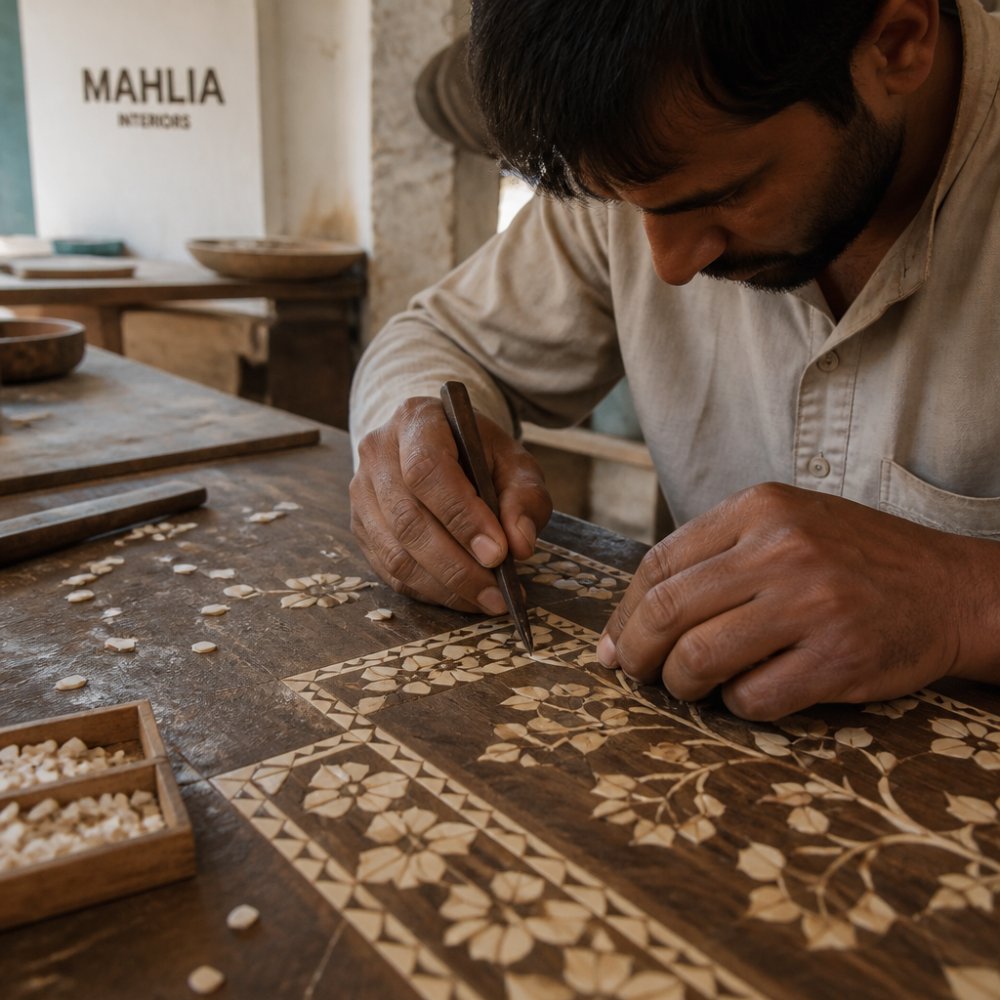
Each piece is structurally sound and made to last. Mass-produced inlay uses shortcuts and failing adhesives; handcrafted pieces use solid materials and traditional joinery.
When you invest in a handcrafted inlay tray, you're acquiring something that improves with age.
Handcrafted inlay furniture costs more because skilled artisans spend significant time on each piece. You're paying for authenticity, durability, and direct support of artisan livelihoods.
Building Your Fair Trade Home on a Real Budget
Fair trade home decor doesn't require unlimited spending. Strategic choices build an ethical home within realistic constraints.
Start with one investment piece. A handcrafted bone inlay tray or mother of pearl rectangular tray becomes the anchor and teaches you what quality feels like.
Mix high and low. Pair one statement piece with smaller, more affordable fair trade items.
Buy secondhand when possible. Vintage fair trade pieces cost less and extend the life cycle of something already made.
Set a timeline. Add one piece every few months to spread cost and prevent impulse purchases.
| Budget Tier | Example Piece | Price | Best For |
|---|---|---|---|
| Entry | Recycled glass necklace | $245 | Wall art, small spaces |
| Accessible | Oil pot or small tray | $75-$290 | Shelving, vanities, accents |
| Investment | Rectangular tray | $260-$450 | Coffee tables, consoles |
Fair trade home decor for beginners means understanding that cost reflects value. A handcrafted tray lasts longer and carries more meaning than mass-produced alternatives.
Caring for Fair Trade Pieces Long-Term
Handcrafted pieces reward proper care. Understanding maintenance ensures your investment appreciates rather than deteriorates.
Bone inlay requires gentle handling. Dust with a soft, dry cloth. Avoid prolonged sunlight (fades bone) and excessive moisture (warps wood). Dry immediately if wet.
Mother of pearl is more delicate than bone. The shell's iridescence can fade if exposed to harsh chemicals or abrasive cleaning. Use only a soft, dry cloth.
Wooden bases benefit from occasional conditioning with natural oils.
Storage matters if you're not using a piece regularly. Store in a cool, dry place away from direct heat or air conditioning vents.
The beauty of fair trade home decor is that it improves with age.
Fair trade home decor for beginners isn't about perfection or expense. Start with one piece, understand the craftsmanship, and build from there. Shop our new arrivals and discover how fair trade home decor transforms both your space and the lives of the artisans who create it.
Frequently Asked Questions
What makes fair trade home decor different from regular decor?
Fair trade home decor ensures artisans and workers receive fair wages, work in safe conditions, and their communities benefit directly from sales. Unlike mass-produced pieces, fair trade items often support specific artisan communities and use responsibly sourced materials. When you buy fair trade home decor, you're investing in craftsmanship, sustainability, and ethical supply chains that respect both people and the environment.
How can I tell whether home decor is genuinely fair trade?
Look for transparent sourcing information, certifications from recognised fair trade organisations, and clear documentation about where and how pieces are made. Genuine fair trade brands share details about the artisans, communities, and production methods. Ask sellers for proof of ethical sourcing, supply chain transparency, and worker welfare standards. Handcrafted pieces from established ethical brands often come with information about the artisans who made them.
What questions should I ask before buying artisan-made home decor?
Ask where the piece is made, who created it, what materials are used, how workers are paid, and whether the brand supports artisan communities. Inquire about durability, care requirements, and customisation options. For handcrafted items like inlay furniture, ask about the sourcing of materials like bone or mother of pearl, turnaround times for custom orders, and what happens if you're not satisfied. Understanding these details helps you make confident, values-aligned purchases.
Are handcrafted inlay furniture and homewares sustainable?
Handcrafted inlay pieces can be highly sustainable when made with ethically sourced materials and traditional techniques. Unlike mass-produced furniture, artisan-made items are built to last generations, reducing waste. When sourced responsibly, materials like bone, mother of pearl, and natural wood support sustainable practices. The key is verifying that your chosen brand uses 100% ethically sourced materials and supports artisan communities, ensuring both environmental and social responsibility.
Can I decorate with fair trade pieces without changing my whole home?
Absolutely. Start small with accessories like trays, bowls, or decorative items that complement your existing style. Fair trade pieces range from minimalist to ornate, so you can find items that match your aesthetic. Handcrafted bone inlay trays, for example, work in modern, coastal, or traditional interiors. Begin with one statement piece or a few smaller homewares, then add more as your confidence grows and your collection evolves naturally.
How do I know fair trade pieces are worth the investment?
Fair trade items cost more because you're paying for skilled craftsmanship, ethical wages, sustainable materials, and artisan community support. Each handcrafted piece is unique and built to last, making it a long-term investment rather than fast furniture. Quality artisan work, transparent sourcing, and durability mean these pieces retain their beauty and value. When you buy fair trade, you're supporting livelihoods and getting a piece with a meaningful story behind it.
What eco-friendly decorating ideas work for small spaces or rentals?
Choose portable, smaller fair trade pieces like decorative trays, handcrafted bowls, or wall art that don't require installation. Look for versatile items that work across different rooms and styles. Recycled glass beads, wooden sculptures, and smaller inlay accessories add character without commitment. Layer these pieces with what you already own, and focus on sustainable styling rather than replacing everything. This approach lets you express your values while respecting rental restrictions and space limitations.