
Are Sustainable Luxury Furniture Trends 2026 Worth It?

Last Updated: October 27, 2026
Quick Summary
Sustainable luxury furniture trends in 2026 are worth it because they favour fewer, better-made pieces in honest materials that deliver long-term value over seasonal refresh. The defining furniture trends of 2026 include quiet luxury, Japandi, warm neutrals and sustainable wood craftsmanship.
- Quiet luxury expresses restraint through material quality: solid wood with visible grain and natural finishes rather than heavy lacquer.
- Embodied carbon is the total greenhouse gas emitted before a material ever reaches a room.
- Ask suppliers for species and origin, custody records and workshop identity to verify provenance.
- FSC chain-of-custody certificates carry a unique code checkable on the FSC public database.
- Custom lead times are 6-8 weeks from deposit payment.
Table of Contents
- Why Sustainable Luxury Furniture Trends 2026 Are Worth the Investment
- The Defining Interior Design Trends of 2026
- Sustainable Furniture Materials Shaping 2026
- How to Spot Ethically Sourced Furniture
- Bespoke Sustainable Furniture and the Case for Custom Pieces
- Timeless Furniture Design That Outlasts the Trend Cycle
- Material Trade-Offs and Lifecycle Impact: What Competitors Skip
- Commissioning Your Own Piece: What to Expect
- Frequently Asked Questions
Why Sustainable Luxury Furniture Trends 2026 Are Worth the Investment
Sustainable luxury furniture trends in 2026 reward a different kind of buyer: one who treats a piece of furniture as a decade-long decision rather than a seasonal refresh. At Mahlia Interiors, we collaborate with customers on custom inlay design, using 100% ethically sourced materials and individually handcrafted construction.
The shift from trend-led buying to long-term value
Trend-led buying has a hidden cost. Sustainable luxury inverts that logic. For a broader look at how handcrafted pieces fit modern homes, our 2026 guide to luxury handcrafted furniture covers the full picture.
The Defining Interior Design Trends of 2026
The strongest furniture trends of 2026 all point the same direction: fewer pieces, better made, in materials that look and feel honest. Trend coverage from Oblist's luxury furniture design outlook places sustainable wood craftsmanship among the defining directions for the year.
Quiet luxury, Japandi and warm neutrals
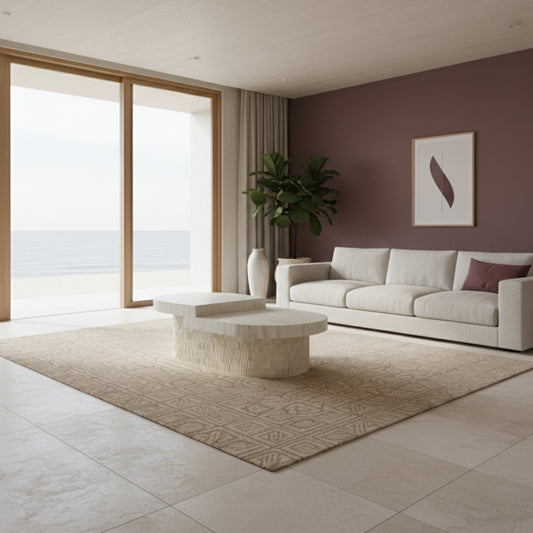
Quiet luxury is not minimalism with a bigger budget. It is restraint expressed through material quality: solid wood with visible grain, natural finishes rather than heavy lacquer, and silhouettes that let texture do the talking. Japandi merges that restraint with organic shapes and low, grounded forms. Warm neutrals, earthy tones and aged wood finishes tie the look together and make a room feel lived in rather than staged.
Sustainable Furniture Materials Shaping 2026
Material selection is where sustainability claims either hold up or fall apart. The 2026 palette, solid wood from responsibly managed sources, natural stone, warm-toned metals, reclaimed and vintage pieces, and natural fibres such as linen and organic cotton, is well covered elsewhere.
Comparing materials on durability, sourcing and impact
| Material | Strength | Trade-off to weigh |
|---|---|---|
| Solid timber | Repairable, refinishable, ages with character | Needs responsible harvesting and ongoing care; some finishes off-gas |
| Reclaimed and vintage timber | Avoids new harvest; often denser, older-growth stock | Supply is unpredictable; may carry old finishes that need safe removal |
| Natural stone | Extremely long-lived; repairable surface | Heavy and energy-intensive to extract and transport; high embodied carbon per piece |
| Warm-toned metals | Recyclable and structurally strong | Mining impact; finishes and coatings vary widely in emissions |
| Recycled metals and plastics | Lower primary-material demand | Quality varies; recycled content should be certified, not assumed |
| Linen and organic cotton | Renewable, breathable, biodegradable | Water and land use in growing; dyes and finishes matter as much as the fibre |
| Bone and mother of pearl inlay | Natural material worked by hand; extremely durable when cared for | Labour-intensive by design, which is precisely why it lasts |
Embodied carbon and the case for fewer, better pieces
Embodied carbon is the total greenhouse gas emitted in extracting, processing, manufacturing and transporting a material before it ever reaches a room. A life-cycle assessment of furniture products published in Scientific Reports examined the environmental impacts of 25 furniture items and supports that framing rather than a simple material ranking.
Indoor air quality: the emissions you cannot see
Sustainability is not only about forests and quarries; it is also about the air inside the room. Finishes, adhesives, foams and textile treatments are the main sources of volatile organic compounds (VOCs) in new furniture, and they can continue to off-gas for weeks after delivery. The practical choices are straightforward:
- Finishes, ask for low-VOC or water-based lacquers, oils and waxes rather than solvent-heavy coatings.
- Adhesives, formaldehyde-based glues in panel products and laminates are a common source; ask what binds the piece.
- Foams and upholstery, polyurethane foam and stain-resistant textile treatments are frequent offenders; natural latex and untreated fibres are the lower-emission alternatives.
- Ventilation, new solid-timber pieces with oil finishes typically settle faster than heavily coated or foam-filled items; air the room well in the first weeks.
Bone and mother of pearl inlay sit in a category of their own. Our own history of inlay furniture craftsmanship traces how that technique evolved.
How to Spot Ethically Sourced Furniture
Ethically sourced furniture means two things can be demonstrated: the material can be traced back through each handler, and the people who worked it were paid and treated fairly.
Chain of custody, explained plainly
Chain of custody is the paper trail that follows a material from forest, quarry or farm through every processor, transporter and workshop to the finished piece. A credible chain has no gaps: each transfer is recorded, and the species or material is named rather than described generically. When a supplier cannot say which forest a timber came from, or which workshop assembled the frame, the chain has a break, and a break is where unverified material enters a luxury piece.
Ask for three things and read them together:
- Species and origin, the botanical name of the timber, not just 'solid wood', plus the region of harvest.
- Custody records, invoices and transport documents linking each stage, with the supplier able to explain any gap.
- Workshop identity, the name and location of the facility where the piece was made, and who did the finishing and inlay.
Certification schemes worth asking about
Certification is not a substitute for a chain of custody, but it is a shortcut to verifying one. The schemes most relevant to furniture buyers are:
- Forest certification, the Forest Stewardship Council (FSC) and the Programme for the Endorsement of Forest Certification (PEFC) both certify forest management and chain of custody. FSC chain-of-custody certificates carry a unique code that can be checked on the FSC public database, so a claim is verifiable rather than asserted.
- Recycled content, claims about recycled timber, metal or textile content should be backed by a standard such as GRS (Global Recycled Standard) for textiles, with a transaction certificate covering the specific batch.
- Emissions and indoor air quality, low-VOC finishes, adhesives and foams are covered by schemes such as Green Star and the Good Environmental Choice Australia (GECA) label for products sold here, and by low-emission product certification for panel products and sealants.
- Timber legality, for imported timber, ask how the supplier satisfies Australia's illegal logging prohibitions, which require importers to exercise due diligence on the source of regulated timber products.
Questions that separate real provenance from marketing
A short script works better than a long one. Ask: Which forest or region did this timber come from? Can I see the chain-of-custody certificate and its number? Which workshop made the piece, and how are the artisans paid? What finish and adhesive were used, and are they low-VOC? What happens if a joint fails or a surface is damaged, can it be repaired rather than replaced?
If you want to understand what drives the price difference between artisan and mass-produced work, our guide to why artisan furniture costs more explains the cost structure.
Bespoke Sustainable Furniture and the Case for Custom Pieces
Bespoke sustainable furniture offers a personalised option. Mahlia Interiors collaborates with customers on custom inlay design.
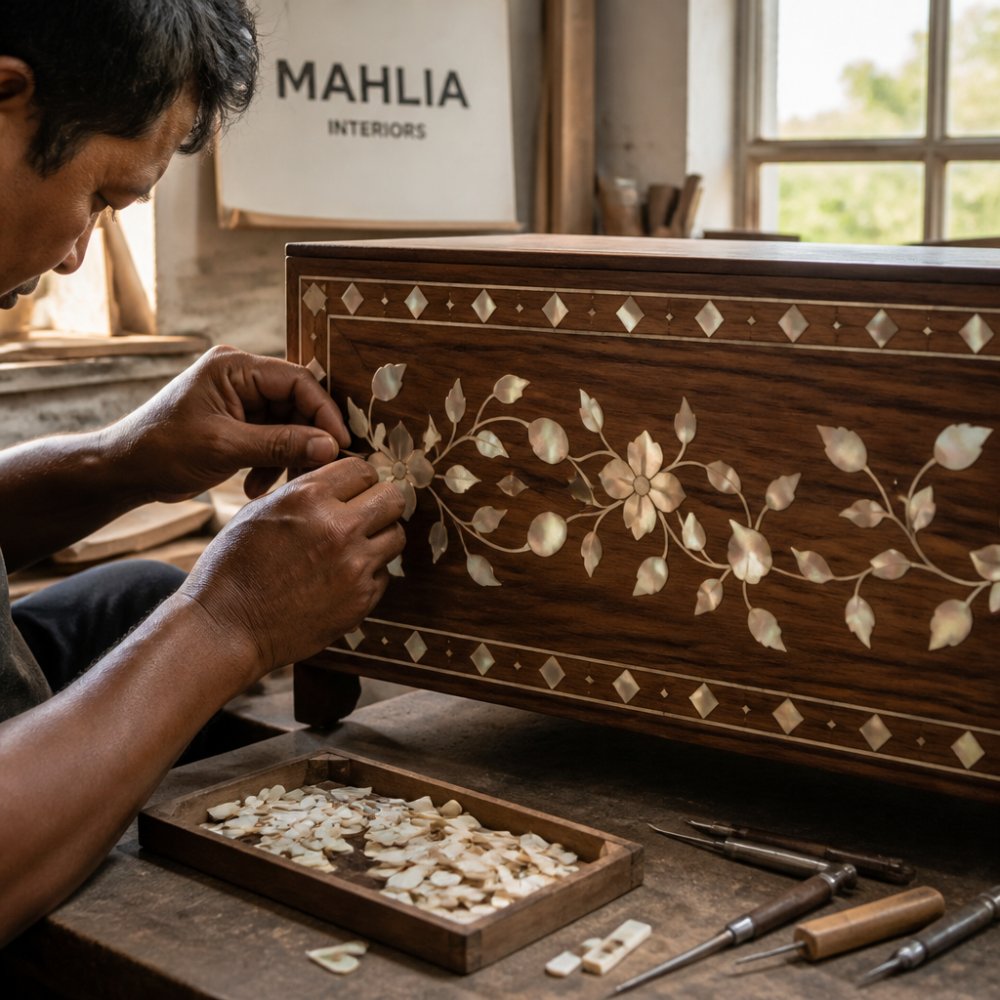
Mahlia Interiors collaborates with customers on custom inlay design, using 100% ethically sourced materials and individually handcrafted construction.
Timeless Furniture Design That Outlasts the Trend Cycle
Timeless furniture design is the discipline of choosing forms and finishes that will not date: clean proportions, natural materials, and hardware that reads as considered rather than current.
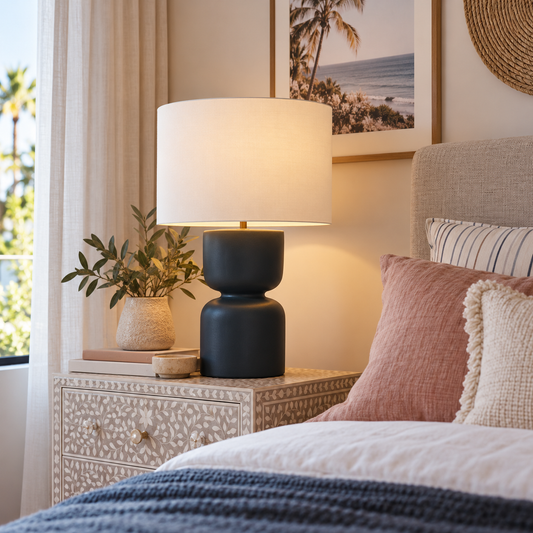
Our Oak & Layered Bone Cabinet is a working example. The light-toned timber frame carries scalloped bone fronts and brass-finished hardware, and the bone scallops can be dyed to any colour. If you are browsing for pieces in this spirit, our furniture cabinet collection is the place to start.
Material Trade-Offs and Lifecycle Impact: What Competitors Skip
Every material carries a trade-off, and honest sustainability guidance names them. A life-cycle assessment of furniture products published in Scientific Reports examined the environmental impacts of 25 furniture items, and the broader lesson from lifecycle thinking is consistent: the longest-serving piece usually carries the lowest impact per year of use.
Commissioning Your Own Piece: What to Expect
Custom lead times are 6-8 weeks from deposit payment.
| Stage | What happens | What you provide |
|---|---|---|
| Brief | We discuss dimensions, palette and purpose | Room measurements, reference images |
| Design | Inlay pattern and finish confirmed | Approval of the design |
| Deposit | Production slot secured | Deposit payment |
| Craft | Piece is handcrafted by artisans | Availability for queries |
| Delivery | Finished piece dispatched | Delivery details |
Before committing, our guide to custom bone inlay turnaround time walks through the timeline in more detail. Mahlia Interiors supports artisan communities through this work, and every piece is individually handcrafted.
Frequently Asked Questions
What makes luxury furniture sustainable?
Sustainable luxury furniture combines responsibly sourced materials. A 2025 life-cycle assessment of 25 furniture products in Scientific Reports examined environmental impacts across production and disposal.
What sustainable furniture materials are trending in 2026?
Handcrafted inlay pieces using bone and mother of pearl also fit this direction.
How can I tell whether furniture is ethically sourced?
Ask for documentation before you buy. Reputable makers can explain where timber comes from, how animal-derived materials are obtained, and who made the piece. Look for written sourcing policies, chain-of-custody paperwork and workshop details. If a seller cannot answer basic questions about provenance, treat that as a warning sign. Ethical sourcing is verifiable, not just a line in the marketing copy.
Is bespoke furniture more sustainable than mass-produced furniture?
It often is, for three reasons. Custom pieces are made to order, so there is less unsold stock going to waste. They are built to your room's dimensions, which reduces the temptation to replace them when a space changes. And they are usually repairable, because a craftsperson who built the piece can restore it. Mass-produced furniture is often glued and composite-based, which makes repair difficult and shortens its useful life.
How do I know handcrafted inlay furniture will suit a modern, minimalist home?
A light timber frame with scalloped bone fronts, like the Oak & Layered Bone Bedside Chest at $1,590, is one option to consider. The bone scallops could also be dyed to any colour.
What should I look for when choosing sustainable luxury furniture?
For custom work, lead times are 6-8 weeks from deposit payment.
The challenge with sustainable luxury is separating genuine craftsmanship from a trend dressed up in green language. Mahlia Interiors builds around 100% ethically sourced materials, individually handcrafted construction and custom inlay design, so you can specify a piece that fits your space and verify what went into it. Get started with Mahlia Interiors and commission a piece made to last.