
Maintaining Inlay Furniture in Humid Climates: 2026 Guide

Table of Contents
- Why Humid Climates Are Hard on Inlay Furniture
- Cleaning Bone Inlay Furniture: The Gentle Routine That Works
- Protecting Wooden Furniture from Humidity: A Monitoring Routine
- Safe Cleaners for Inlay Furniture (and What to Avoid)
- Sunlight Protection for Furniture: Placement That Preserves the Finish
- Mould, Spills and Moisture Damage: What to Do Fast
- Frequently Asked Questions
Last Updated: October 13, 2026
Why Humid Climates Are Hard on Inlay Furniture
Maintaining inlay furniture in humid climates comes down to one thing: moisture control. Bone inlay and mother of pearl sit inside a timber frame, and that frame moves as the air around it changes. When damp air lingers, wood takes on water, swells, and then shrinks again once conditions dry out. Over time, that cycle can lift inlay pieces, cloud a finish, or open small cracks along a joint.
At Mahlia Interiors, every chest and side table we make is handcrafted, so each one responds a little differently to its surroundings. The good news is that inlay furniture is not fragile. It just needs a routine built around keeping moisture out and airflow moving.

Below, we break down exactly how to clean, monitor, and protect your pieces, plus what to do the moment a spill or a damp spell hits.
Cleaning Bone Inlay Furniture: The Gentle Routine That Works
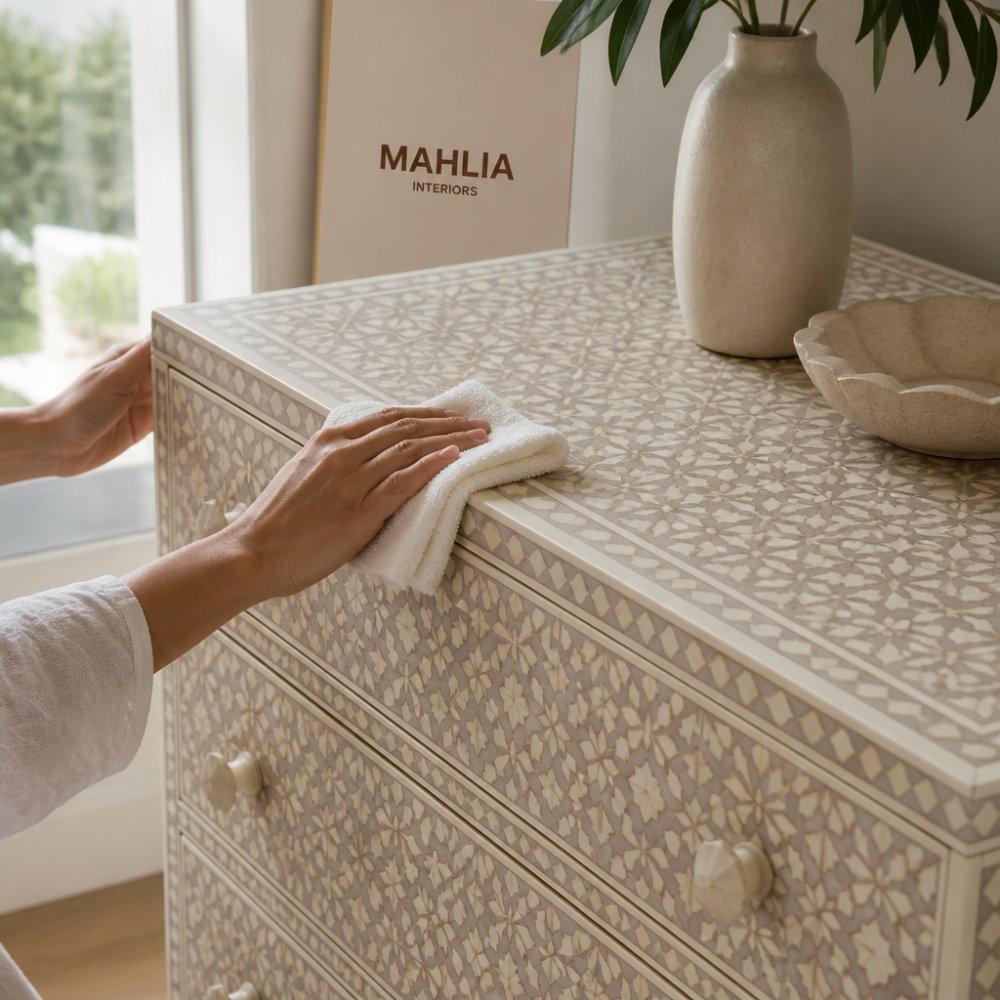
Cleaning bone inlay furniture is a dry-first job. Start with a soft, dry cloth and lift dust away before anything wet touches the surface. Damp cloths have their place, but only sparingly and never as the first step.
Dusting and Everyday Wiping
Dust settles into the fine gaps between inlay pieces, and that grit can dull the sheen fast. A microfibre cloth, used dry, lifts it out without scratching.
- Dust weekly with a soft, dry cloth
- Work in the direction of the grain, not against it
- Use a soft brush for carved edges and tight corners
- Skip feather dusters, which just move debris around
- Never press hard on a raised inlay section
Drying Every Surface Completely
If you do use a slightly damp cloth, dry the surface straight away. Standing water is the enemy here. It seeps into seams, softens the finish, and gives mould a place to start.
- Wring the cloth until it is barely damp
- Wipe one small area at a time
- Follow immediately with a dry cloth
- Leave drawers open for an hour so air reaches the inside
- Never let water pool on the decorative surface
Protecting Wooden Furniture from Humidity: A Monitoring Routine
Protecting wooden furniture from humidity starts with knowing your numbers. Buy a simple hygrometer, a digital one costs around $20-$40 from hardware stores, and keep it in the room where your inlay pieces live. Many homes in humid regions sit well above a comfortable range without anyone noticing.
A practical routine looks like this:
- Check the hygrometer twice a week, morning and evening
- Aim to keep indoor relative humidity between 45% and 55%, this is the range where timber and inlay materials are most stable
- Run a dehumidifier when readings stay above 60% for more than a day
- Run a humidifier only if readings drop below 40% for extended periods
- Open windows when outdoor air is drier than indoor air
- Keep airflow moving with a ceiling fan or a small room fan
Why Inlay Materials Respond Differently
Bone and mother of pearl are relatively stable once sealed, but the adhesive and grout holding them in place can soften or shrink when moisture sits on the surface. Resin inlay, common in contemporary pieces, can cloud or lift at the edges if dampness persists. Timber frames swell and shrink with humidity changes, and because inlay pieces are set into that frame with fine tolerances, even a small movement can open a hairline gap. That is why steady humidity matters more than chasing a perfect figure.
A Simple Threshold Action Plan
| Hygrometer Reading | What It Means | What To Do |
|---|---|---|
| Below 40% | Air is dry; timber may shrink | Run a humidifier, group plants nearby, or place a water tray in the room |
| 45-55% | Ideal range | Maintain current routine |
| 56-65% | Slightly damp | Increase airflow, check for condensation on windows |
| Above 65% for 24+ hours | High risk of swelling and mould | Run a dehumidifier, close windows, inspect inlay edges for lifting |
Seasonal Adjustments
In wet months, run a dehumidifier during the day and keep windows closed when outdoor humidity is high. In drier months, especially if you use heating, humidity can drop sharply, that is when a humidifier or a simple water tray near a heat source helps. Coastal homes often need year-round dehumidification because salt air holds moisture differently. Rooms with limited ventilation, such as walk-in wardrobes or closed-off spare rooms, benefit from a small moisture absorber placed near the furniture.
Safe Cleaners for Inlay Furniture (and What to Avoid)
Safe cleaners for inlay furniture are mild and pH-neutral. A diluted drop of gentle dish soap in water, applied with a barely damp cloth, handles most marks. Everything else is a risk.
What to avoid:
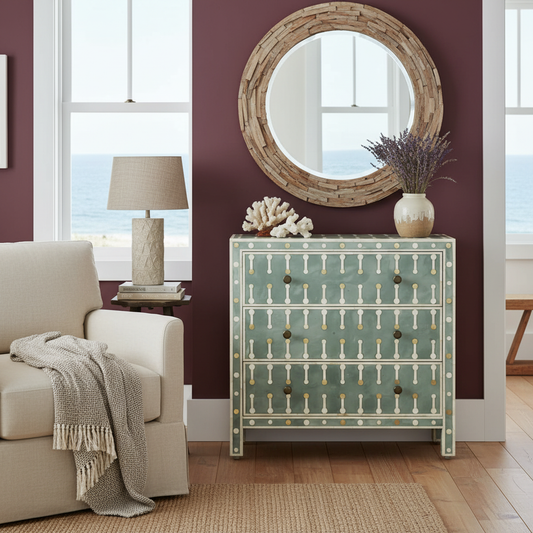
Bone Inlay 4 Drawer Chest : Floral : Grey →
- Abrasive creams and scouring pads, which scratch the finish
- Ammonia and bleach-based sprays, which can dull or discolour inlay
- Oil-based polishes, which trap dust and can darken bone
- Silicone sprays, which leave a film that is hard to remove
- Excess water of any kind
A furniture wax can add a light protective layer if the maker recommends it for your piece. Test any new product on a hidden edge first, then wait a day before using it more widely.
Sunlight Protection for Furniture: Placement That Preserves the Finish
Sunlight protection for furniture is mostly about placement. Direct sun fades finishes, dries timber unevenly, and can yellow the resin around inlay work. Move a piece a metre away from a window and you solve most of the problem.
- Keep pieces out of direct sun, especially in the middle of the day
- Rotate smaller items every few months so fading stays even
- Keep furniture away from heaters, fireplaces, and air conditioning vents
- Use curtains or blinds during the hottest part of the day
- Leave a small gap between the piece and the wall for airflow
| Problem | Likely Cause | Fix |
|---|---|---|
| Swelling or sticking drawers | High humidity | Dehumidifier, better airflow |
| Cracking along a joint | Dry air or direct heat | Move from heat, add humidity |
| Dull or cloudy finish | Damp cloth left wet | Dry fully, use wax sparingly |
| Musty smell inside drawers | Trapped moisture | Air out, add a moisture absorber |
| Faded inlay colour | Direct sunlight | Reposition, use blinds |
Mould, Spills and Moisture Damage: What to Do Fast
Mould, spills, and moisture damage need speed, not scrubbing. Blot a spill immediately with a dry cloth, then dry the area fully before you do anything else. For mould, wipe the surface with a cloth lightly dampened with diluted white vinegar (one part vinegar to three parts water), then dry it completely and improve airflow in the room.
Inlay-Specific Warning Signs
Different inlay materials fail in different ways. Watch for these early indicators:
- Bone inlay: A chalky white bloom on the surface, or edges that feel slightly raised when you run a finger across them. Bone is porous and can absorb moisture through unsealed grout lines.
- Mother of pearl: A dull, cloudy patch that will not buff out, or a faint lifting at the corners. The nacre layer can delaminate if moisture sits underneath.
- Resin inlay: Cloudiness, a sticky feel, or fine cracks radiating from the inlay edges. Resin is less forgiving of prolonged damp than bone.
- Adhesive and grout: Softening, a darkening along the inlay border, or a musty smell that lingers even after the surface is dry.
Time-Sensitive Response Checklist
If a leak or flood reaches your furniture, act in this order:
- Move the piece to a dry, ventilated space straight away, do not leave it in standing water
- Blot all standing water with dry towels, working from the edges inward to avoid spreading moisture into the inlay
- Open every drawer and door so air circulates inside and out
- Run a dehumidifier nearby for several days, aiming to bring the room below 55% relative humidity
- Watch for swelling, lifting inlay, or a musty smell over the next fortnight, take photos each day if you are unsure whether damage is worsening
When to Call a Professional
If you see any of the following, stop home treatment and contact the maker or a furniture restorer:
- Inlay pieces that have lifted more than a millimetre above the surface
- A musty smell that persists after two weeks of drying and ventilation
- Visible black or green mould spots on the timber or in the grout lines
- Drawers that stick or no longer close flush after the piece has dried
If damage does appear, a professional repair is almost always cheaper than a replacement. Our handcrafted pieces, such as the Bone Inlay 4 Drawer Chest : Floral : Grey, are built to be repaired rather than replaced.
Frequently Asked Questions
Can humidity damage bone inlay furniture?
Yes. In humid climates, moisture in the air can affect the wood base beneath the inlay, causing swelling, warping or cracking over time, while the bone and mother of pearl pieces can lift if the surface stays damp. The fix is consistency: keep relative humidity stable, dry any spills immediately, and avoid leaving inlay furniture in steamy rooms like an unventilated bathroom. Regular inspection of the decorative surface helps you catch lifting or discolouration early.
How should you clean bone inlay furniture?
Start with a soft, dry cloth for routine dusting. For a deeper clean, wring a cloth until it is barely damp, wipe the surface gently, then dry it straight away with a separate soft cloth. Avoid soaking the piece or letting water sit in the inlay grooves. For the best results, avoid household sprays, which can dull the finish or loosen the adhesive holding the inlay.
What should you do if moisture gets into an inlay piece?
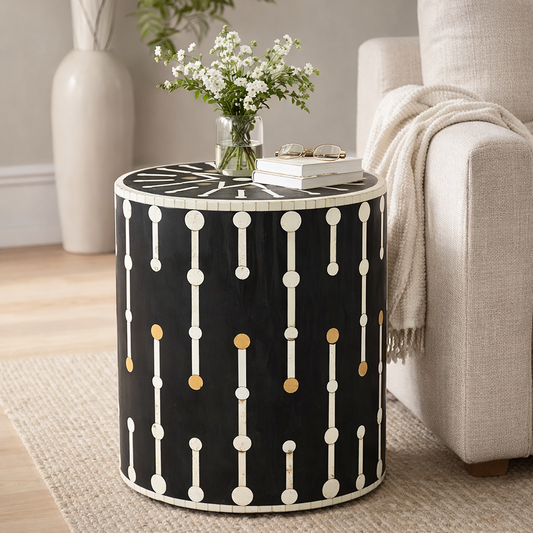
Act quickly. Blot the area with a dry cloth, then let the piece air-dry away from direct heat or sunlight, which can cause the wood to dry unevenly and crack. If the inlay has lifted or the wood has swollen, avoid pressing or gluing it yourself. Contact a restorer or the maker. For a piece like the Bone Inlay Waterfall Side Table, which has a compact surface area, a spill is easier to manage, but the drying rule is the same.
Does a dehumidifier help protect wooden furniture?
A dehumidifier helps by keeping indoor humidity at a stable level, which reduces the swelling and warping that swings in moisture cause. Run it during humid months and check the reading with a hygrometer rather than guessing. Avoid blasting dry air directly at the furniture, and keep the room ventilated. If the air becomes too dry, a humidifier can restore balance, but the goal is steady conditions, not extremes.
Humid air will test any inlay piece, but a simple routine of dry dusting, full drying, and steady humidity keeps yours looking sharp for decades. At Mahlia Interiors, we handcraft every piece from 100% ethically sourced materials and stand behind the artisans who make them. If you want furniture built to last through real life, not just display, browse our new arrivals and find the piece that fits your space.