
Mother of Pearl Inlay Box Cost and Value

Table of Contents
- What Determines Mother of Pearl Inlay Box Cost
- Understanding Handmade Mother-of-Pearl Box Quality
- Mother-of-Pearl Inlay Durability and Longevity
- Vintage Mother-of-Pearl Box Values and Resale
- Mother-of-Pearl Box Care and Maintenance
- Price Range by Box Size and Style
- Why Handcrafted Inlay Boxes Hold Their Value
- Frequently Asked Questions
Last Updated: October 10, 2026
What Determines Mother of Pearl Inlay Box Cost
A mother of pearl inlay box reflects the craftsmanship, materials, and labour invested in its creation. Understanding what drives cost helps you recognise genuine value when evaluating options.
Price depends on size (larger pieces require more material and labour), shell quality and ethical sourcing, artisan skill, and design complexity. Each fragment of shell must be hand-cut, positioned, and secured to create the intricate patterns you see.
Size and Dimensions
Larger boxes command higher prices due to more material and labour hours. A small gift box (20cm × 13cm) and large box (30cm × 20cm) sit in different price categories; the increase isn't linear but adds substantial inlay time.

Small boxes suit jewellery storage or keepsakes; medium boxes offer versatility for household items; large boxes become statement pieces. Choose based on intended use and space, not just budget.
Craftsmanship and Labour
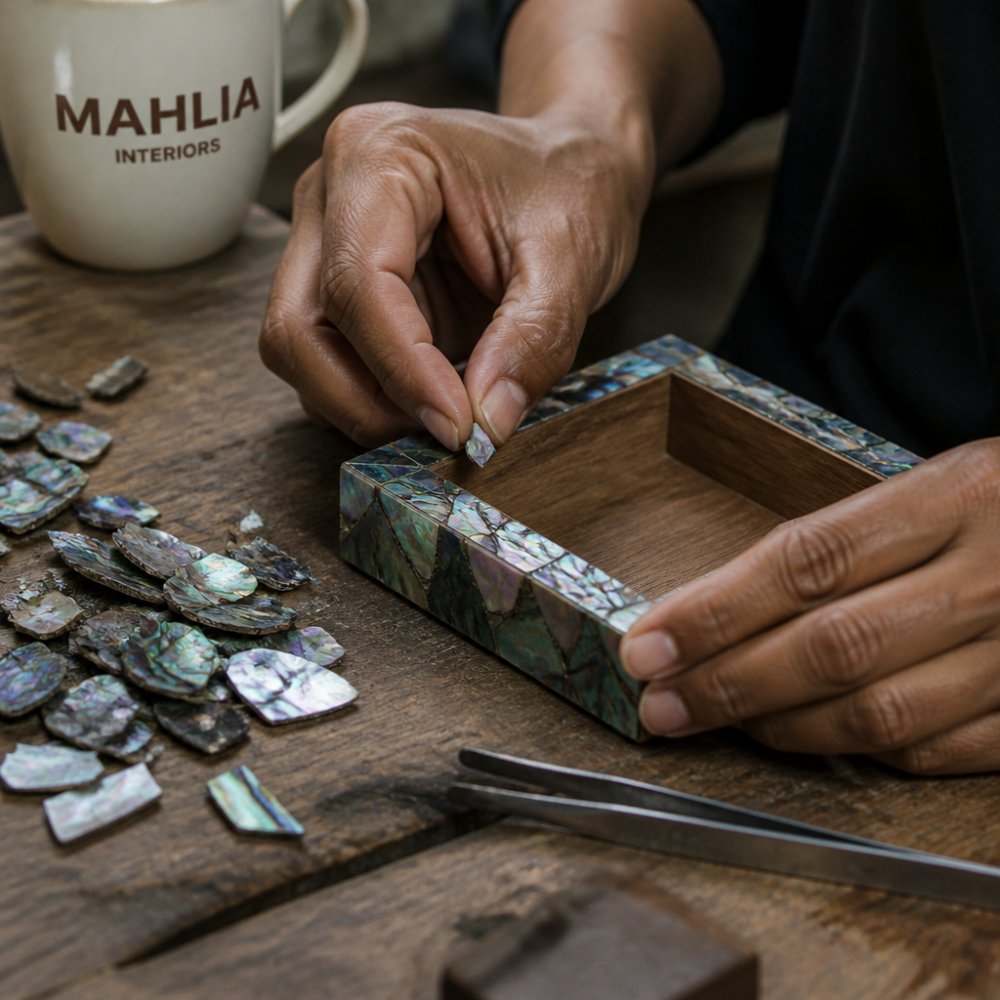
Handcrafted inlay work is labour-intensive. A skilled artisan spends 8-15 hours on a medium-sized box depending on pattern complexity, with labour representing a substantial portion of final cost.
Quality mother of pearl inlay boxes display seamless integration where shell fragments sit flush with the base; gaps, uneven finishes, or misaligned patterns signal rushed work.
Material Quality and Ethical Sourcing
Premium-grade shell displays vibrant iridescence, consistent thickness, and minimal flaws. Ethically sourced materials cost more but ensure sustainable practices and fair wages; poorly sourced materials show quality inconsistencies affecting durability.
Understanding Handmade Mother-of-Pearl Box Quality
Quality in a handmade mother of pearl inlay box reflects both appearance and durability over years of use.
Artisan Techniques and Design Complexity
Sophisticated mother of pearl inlay boxes feature intricate floral patterns, geometric designs, or bird motifs requiring precision and understanding of how light interacts with shell iridescence.
Design complexity directly correlates with labour hours and cost; complex floral designs create more visual depth than simple geometric patterns.
Assessing Authenticity and Construction
Authentic handmade pieces show natural variation, colour differences, and minor irregularities proving human creation; mass-produced boxes display mechanical uniformity lacking artisan character.
Quality boxes use solid wood bases with shell inlay set into resin or traditional adhesives. Hinged lids should operate smoothly; interiors should be clean and sealed.
Mother-of-Pearl Inlay Durability and Longevity
A well-made mother of pearl inlay box lasts decades if properly cared for.
How Abalone Shell and Resin Perform Over Time
Abalone shell is naturally durable and won't crack or fade under normal conditions. Quality resin remains stable across temperature and humidity fluctuations; poor-quality resin becomes brittle or discolours.
The bond between shell and resin directly impacts longevity; weak adhesive causes fragments to shift or loosen.
Real-Life Use and Wear Patterns
Boxes used for jewellery storage endure thousands of open-close cycles. High-quality construction means lids close smoothly after a decade; hinges don't squeak or stick.
Display boxes face environmental exposure to sunlight, humidity, and temperature changes; quality construction resists warping and discolouration.
Vintage Mother-of-Pearl Box Values and Resale
Vintage and antique mother of pearl inlay boxes are driven by age, condition, provenance, and rarity. Assessing resale value and authenticity matters for collectors and sellers.
Assessing Authenticity and Age
Authentic vintage boxes display characteristics distinguishing them from reproductions:
Shell and material markers:
- Genuine abalone shows natural colour variation and iridescence shifts; imitation appears uniform and flat.
- Pre-1980 boxes used thicker shell and traditional adhesives; post-1990 pieces use thinner shell and epoxy resin.
- Genuine inlay extends consistently throughout; imitation shows inconsistent depth.
Construction and joinery:
- Handcrafted pieces show slight irregularities and minor gaps proving human placement; mass-produced boxes display mechanical uniformity.
- Quality hinges operate smoothly; cheap reproductions squeak or wobble.
- Fresh-looking wood on a claimed 50-year-old box suggests recent construction or refinishing.
Maker marks and documentation:
- Authentic pieces bear maker marks, stamps, or signatures.
- Boxes from known artisan regions command premiums if origin is verified.
- Original packaging or provenance documentation increases value.
Condition Grading and Repair Impact on Resale Value
Condition is the largest driver of vintage box resale value:
Mint/Excellent (95-100%): No visible wear, all inlay intact, hinges functional, original finish unmarred. Rare and highly desirable; commands premium pricing.
Very Good (80-95%): Minor surface marks, light patina, all inlay intact, hinges functional. Most common for vintage boxes; suitable for display or use.
Good (60-80%): Visible wear, minor loose inlay (1-3 pieces), slightly stiff hinges, light cracks. Requires inspection; suitable if damage is cosmetic.
Fair (40-60%): Noticeable wear, multiple loose inlay (4-10 pieces), difficult hinges, visible cracks, discolouration. Requires professional assessment; suitable for restoration projects.
Poor (10-40%): Extensive damage, significant missing inlay (10+ pieces), non-functional hinges, deep cracks. Primarily valuable for restoration or parts.
Mother of Pearl Inlay Small Gift Box : Floral : White →
Restoration and value: Professional restoration typically reduces resale value by 30-50% compared to unrestored equivalents.
How Age and Rarity Drive Pricing
Vintage boxes (1960s-1980s) in excellent condition typically command higher prices depending on maker reputation and design distinctiveness. Antique boxes (pre-1940) with documented provenance command premium prices at specialist dealers or auction.
Rarity multipliers include limited production runs, unusual materials, notable makers, distinctive designs, and exceptional condition. Mint-condition vintage boxes command 50-100% premiums over good-condition equivalents.
Resale Market and Value Retention
Quality contemporary boxes retain value well. A well-made box in excellent condition maintains 70-85% of purchase price over 10 years; after 20-30 years, handcrafted boxes may appreciate modestly if maker becomes recognized.
Vintage boxes appreciate more reliably, reflecting growing collector interest in handmade goods and increasing scarcity of quality pieces.
Support resale value: Documented maker, excellent condition, original components, distinctive design, ethical sourcing.
Reduce resale value: Unknown maker, visible damage, missing components, generic design, staining or discolouration.
Mother-of-Pearl Box Care and Maintenance
Protecting your investment requires understanding how to clean and store these pieces properly.
Cleaning and Storage Best Practices
Dust regularly with a soft, dry cloth. For deeper cleaning, use a barely damp cloth; never submerge the box. Wood and resin absorb moisture, causing warping or swelling.
Store away from direct sunlight (causes resin yellowing), heating vents, and temperature fluctuations. Climate-controlled spaces preserve appearance and integrity.
Protecting Against Humidity and Environmental Damage
High humidity is the primary environmental threat, causing wood swelling and loosening shell inlay. In humid climates, use silica gel packets to absorb excess moisture.
Temperature swings stress materials as resin and wood expand at different rates. Maintain stable conditions (18-24°C, 40-50% humidity) for optimal preservation.
Price Range by Box Size and Style
Pricing depends on condition, craftsmanship, materials, and age. This section breaks down real drivers of price variation to help identify fair value.
Price Variation by Condition and Craftsmanship
Identical boxes sell for vastly different prices depending on condition and maker reputation. Handcrafted boxes command higher prices than mass-produced alternatives due to durability and aesthetic depth.
Craftsmanship level also drives pricing. Boxes featuring intricate multi-colour floral patterns with 50+ individual shell pieces command higher prices than simple geometric designs. Artisans known for precision work and ethical sourcing justify premium pricing; their pieces often appreciate modestly over time, whilst rushed work depreciates.
New Handcrafted Boxes: Price Breakdown by Size
| Box Size | Price Range (Handcrafted) | Key Cost Drivers | Lead Time |
|---|---|---|---|
| Small Gift Box | $120-$200 | Simple to moderate inlay, 6-10 labour hours | 6-8 weeks from deposit |
| Mid-Size Box | $200-$320 | Moderate to complex inlay, 12-18 labour hours | 6-8 weeks from deposit |
| Large Statement Box | $280-$450 | Complex multi-pattern inlay, 18-25 labour hours | 6-8 weeks from deposit |
These ranges reflect ethically sourced materials, skilled artisan labour, and quality resin or traditional adhesive construction. Prices vary based on shell quality (premium iridescent abalone costs more than standard grade), design complexity, and maker location. Boxes ordered custom typically require a deposit to begin work.

Vintage and Antique Boxes: Age and Rarity Premium
Vintage boxes (1960s-1990s) in excellent condition typically sell for $150-$400 depending on origin, maker, and design distinctiveness. Antique boxes (pre-1960) command $300-$800+ if provenance is documented and condition is strong.
The vintage premium reflects scarcity (fewer pieces exist), historical craftsmanship standards (older boxes often used superior materials and techniques), and collector demand. However, restoration history significantly reduces value; a professionally restored antique box may sell for 40-60% less than an unrestored equivalent, even if the restoration is invisible to the eye.
Identifying Fair Pricing
When evaluating a mother of pearl inlay box, cross-reference these factors:
- Condition grade, Use the five-point scale above to assess the actual state, not the seller's description.
- Inlay complexity, Count visible shell pieces and pattern intricacy; simple geometric designs justify lower prices than detailed florals.
- Material authenticity, Genuine abalone shell shows natural colour variation and iridescence; imitation inlay appears uniform and flat.
- Maker reputation, Established artisans with documented work command premiums; unknown makers' pieces should price lower unless condition is exceptional.
- Age and provenance, Vintage pieces with documented origin or maker marks justify higher prices; contemporary unmarked boxes should reflect labour hours and materials only.
- Comparable sold listings, Asking prices often exceed actual sale prices by 15-30%; seek evidence of what similar boxes have actually sold for, not just what sellers are asking.
A fair price balances these factors.
Why Handcrafted Inlay Boxes Hold Their Value
Quality handcrafted items appreciate differently than mass-produced goods. A mother of pearl inlay box created by skilled artisans using ethically sourced materials doesn't depreciate the way fast furniture does, it maintains relevance and appeal across decades.
Several factors support this value retention. First, handmade pieces become rarer as time passes, no two boxes are identical, and each one represents irreplaceable labour hours.
When you invest in a handcrafted mother of pearl inlay box from artisan furniture makers focused on ethical sourcing, you're acquiring something with staying power. The piece works as well in a contemporary minimalist home as it does in a traditional space.
Frequently Asked Questions
What makes a mother of pearl inlay box worth the investment?
A mother of pearl inlay box represents investment in handcrafted artistry, ethical sourcing, and durability. Each piece is individually created by skilled artisans using ethically sourced abalone shell, making it unique and timeless. Unlike mass-produced alternatives, these boxes maintain their aesthetic appeal and structural integrity for decades, often becoming heirlooms. The intricate inlay work cannot be replicated by machines, and the time invested in craftsmanship directly influences the final value.
How durable is mother-of-pearl inlay on furniture?
Mother-of-pearl inlay is highly durable when properly maintained. Abalone shell is naturally resilient and resistant to cracking when embedded in quality resin. The inlay itself does not fade or yellow over time. However, the surrounding resin or wood base requires care to prevent moisture damage in humid climates. With appropriate storage and cleaning practices, a handmade mother-of-pearl box can last generations without significant deterioration, making it a practical choice for everyday use and display.
What factors affect the value of a mother-of-pearl inlay box?
Several factors determine value: size (larger boxes command higher prices), complexity of the inlay pattern, quality of materials used, artisan reputation, condition, and age. Handmade pieces with intricate floral or geometric designs cost more than simple patterns. Ethically sourced abalone shell and sustainable construction methods increase value. Vintage boxes may appreciate if in excellent condition. Custom designs or limited editions also hold stronger resale value than standard production pieces.
How should you care for a mother-of-pearl inlay box?
Clean your box gently with a soft, dry cloth to remove dust. Avoid prolonged exposure to direct sunlight, which can fade the resin base. Keep the box away from extreme humidity and temperature fluctuations, as these can cause the resin to warp or the inlay to shift. Store in a cool, dry location, ideally with silica packets to manage moisture. Never use harsh chemicals or abrasive cleaners. For stubborn marks, use a slightly damp cloth and dry immediately. Regular gentle care preserves both the aesthetic and structural integrity.
A mother of pearl inlay box represents more than storage, it's a commitment to quality, craftsmanship, and ethical consumption. The investment reflects the skill, materials, and care embedded in every piece. Shop our new arrivals and discover handcrafted boxes designed to elevate your space whilst supporting artisan communities. Each piece tells a story of precision and purpose, creating lasting beauty for your home.