
Is Bone Inlay Furniture Durable for Families?

Table of Contents
- How Bone Inlay Furniture Is Built to Last
- Bone Inlay vs Mother of Pearl Durability
- How Bone Inlay Holds Up in Family Homes
- How to Clean Bone Inlay Furniture Safely
- Is Beeswax Safe for Mother of Pearl Inlay?
- Repairing Chips and Surface Wear
- What to Know Before You Buy
- The Verdict on Family Durability
- Frequently Asked Questions
Last Updated: September 5, 2026
Bone inlay furniture is durable enough for family homes when built on a solid hardwood frame, sealed with quality lacquer, and treated with sensible care. The pieces that fail are almost never the bone itself, but the construction quality and finish applied by the maker.

How Bone Inlay Furniture Is Built to Last
Each piece begins with a timber carcass, with hand-cut bone tiles laid into a bed of resin. The difference between a piece that lasts and one that chips within a year comes down to the materials underneath and the number of finishing layers on top.
The Role of the Hardwood Base
A seasoned hardwood frame resists warping and keeps the inlaid surface flat, preventing the bone tiles from cracking under stress. Cheaper versions often use softwood or particleboard, which flexes and transmits movement directly to the brittle bone surface.
Why the Lacquered Finish Matters
A proper finish involves multiple coats, each buffed down before the next, creating a sealed barrier over the bone and resin. This makes the surface wipeable and protects the bone from absorbing liquids that cause yellowing or odours.
Bone Inlay vs Mother of Pearl Durability
Both materials are similar in hardness but behave differently under impact. Bone is more forgiving and tends to chip rather than shatter, while mother of pearl can fracture more dramatically if struck. For high-traffic family areas, bone inlay is the more resilient choice.

Mother of pearl offers a luminous, iridescent quality that bone cannot replicate, which is why it is often reserved for feature panels and decorative accents. Many pieces, including several in the Mahlia Interiors range, combine both materials.
How Bone Inlay Holds Up in Family Homes
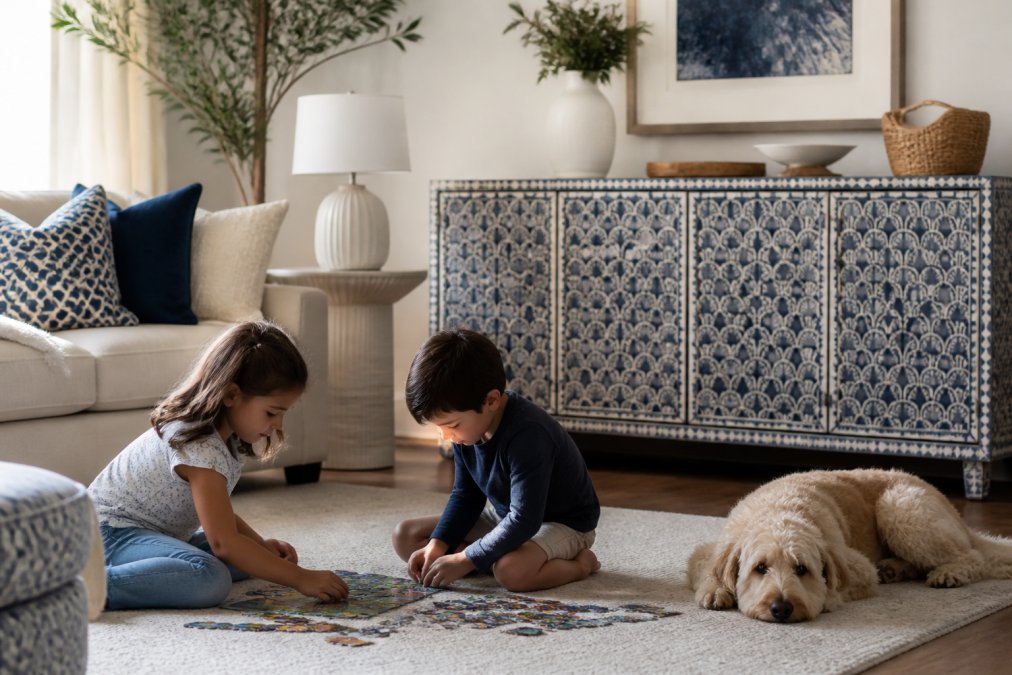
Bone inlay furniture holds up well in family homes when you understand its limitations. It is scratch-resistant and handles the occasional knock, but it is not a surface for unsupervised toddlers with toys or pets that jump onto furniture. Match the piece to the right room and use it as intended.
Real-World Family Wear Scenarios
Most family damage comes from specific, predictable accidents. Understanding these scenarios helps you decide where to place a piece.
Sticky fingers and food spills. A well-sealed surface resists a smear of jam or splash of orange juice if wiped up promptly. Sugary liquids can dry into a tacky film that attracts dust and, if left for days, can dull the lacquer. Wipe promptly with a damp cloth and dry the surface.
Heavy toy impacts. The bone resists a glancing blow, but a sharp, direct impact on a corner or edge can chip the tile or crack the lacquer. The lacquer is the shock absorber; a crack exposes the bone to moisture. Keep pieces out of the direct line of fire in a play area; a buffet or tallboy is safer than a low coffee table.
Liquid spills from cups and bottles. A sweaty glass left for hours can leave a ring in the lacquer if the finish is not perfectly sealed. This is a failure of the protective layer, not the bone inlay. Use coasters and placemats as you would with any fine furniture.
Pets and scratching. Pet claws can leave fine scratches in the lacquer, particularly if your dog uses the furniture as a brake. These are usually superficial and can be polished out. The greater risk is a pet jumping onto a piece, which can stress the frame joints. A bone inlay piece is not the right perch for a large dog.
The Height Factor: Choosing the Right Piece for the Right Room
For families with very young children, consider the height of the piece. A low coffee table is more exposed to toy impacts and sticky fingers than a taller sideboard. Pieces like the Bone Inlay 6 Drawer Buffet in Arrows Black & White place the inlaid surface above the chaos zone of crawling and early walking.
A buffet or sideboard in a dining or living area is typically the safest placement because it sits against a wall, away from traffic, and its surface is above the reach of small children. A console table in an entryway is another good option. Low coffee tables and bedside tables suffer most, as drinks, toys, and elbows are in constant contact.
What to Expect Over Time
With normal family use, the first signs of wear appear in the lacquer, not the bone. Fine scratches from dust or debris are common after a few years and can be addressed with gentle polish. Once properly sealed, the bone tiles will not discolour or degrade under normal indoor conditions.
The pieces that fail are almost always those with a softwood or particleboard base, which flexes under load and causes the bone to crack along the seams. Construction quality matters more than the pattern. A well-built piece on a hardwood frame will outlast the children's toy phase and still look elegant when they are adults.
How to Clean Bone Inlay Furniture Safely
Dust regularly with a soft, dry microfibre cloth. For spills, wipe immediately with a slightly damp cloth and dry the area straight away. Avoid abrasive cleaners, bleach, and anything acidic, as these will dull the lacquer and eventually reach the bone.
A mild soap solution is safe for the lacquered finish, but never soak the surface (care for furniture finishes). Excess moisture can seep through tiny imperfections and cause the resin or wooden base to swell. A dedicated furniture polish for lacquered surfaces maintains the shine without leaving residue.
The Cleaning Routine That Protects Your Investment
A consistent routine is the most effective way to extend the life of a bone inlay piece. The goal is to preserve the lacquer, which is the true protective barrier for the bone and resin beneath.
Daily dusting. Use a clean, dry microfibre cloth. Microfibre traps dust rather than pushing it around, preventing fine scratches. Avoid feather dusters, which simply redistribute dust.
Weekly wipe-down. Once a week, or more often in a busy kitchen, wipe the surface with a cloth dampened with water and a drop of mild dish soap. Wring the cloth thoroughly so it is barely damp, never wet. Wipe in the direction of the pattern where possible, then dry immediately with a separate clean cloth.
Monthly polish. A quality furniture polish for lacquered or high-gloss surfaces maintains the shine and adds a protective layer. Apply sparingly to a soft cloth, not directly to the furniture, and buff gently in circular motions.
Choosing the Right Protection Products
Not all polishes and waxes are safe for bone inlay. Any product must be compatible with lacquer finishes.
Safe options:
- Aerosol-free furniture polish designed for high-gloss or lacquered surfaces.
- Microcrystalline wax (such as Renaissance Wax) applied in a thin layer. This conservation-grade product used by museums provides a durable, non-silicone protective coating.
- Natural beeswax polish in small amounts, provided the lacquer is intact. Beeswax adds a subtle sheen but is not a substitute for a damaged finish.
Products to avoid:
- Spray polishes containing silicone or ammonia. These leave a residue that attracts dust and can break down the lacquer over time.
- Abrasive cream cleaners. These will scratch the lacquer and dull the finish.
- Oil-based furniture polishes. These can penetrate the lacquer and cause it to soften or discolour.
- Any product containing alcohol or solvents. These can strip the lacquer and expose the bone to moisture.
Is Beeswax Safe for Mother of Pearl Inlay?
Beeswax is safe for mother of pearl inlay only when the surface is properly sealed, and it is unnecessary if the lacquer is intact. The lacquer provides the protection; the wax merely adds a layer of sheen. Applying beeswax to an unsealed or damaged surface can trap dirt and moisture against the mother of pearl, which accelerates deterioration.
If you choose to use beeswax, apply a thin layer with a soft cloth, let it haze, and buff gently. Do this no more than twice a year. On bone inlay, the same rule applies. The lacquered finish does the hard work, and wax is purely cosmetic.
What to Do When a Spill Happens
Even with the best precautions, spills happen. Speed and the right technique are key.
- Blot, don't wipe. Use a dry cloth or paper towel to blot the spill immediately. Wiping spreads the liquid and can push it into the seams between tiles.
- Damp cloth for residue. If the spill has dried, use a barely damp cloth with a drop of mild soap to gently lift it. Do not scrub.
- Dry immediately. Use a clean, dry cloth to dry the area thoroughly, including the crevices between tiles.
- Assess the damage. If the lacquer has whitened or bubbled, the moisture has penetrated the finish. This requires professional attention to strip and re-lacquer the affected panel.
The Role of Sealants and Top Coats
Some manufacturers apply an additional sealant or top coat over the lacquer to enhance durability. These are typically applied at the factory and are not intended for consumer reapplication. If your piece has a manufacturer-applied sealant, follow the maker's care instructions rather than applying additional products.
If you are considering a DIY sealant for a piece that has lost its protective finish, consult a professional restorer. Applying a sealant to a surface with exposed bone or resin can trap moisture and cause more harm than good. The safest approach is professional re-lacquering.
Is Beeswax Safe for Mother of Pearl Inlay?
Beeswax is safe for mother of pearl inlay only when the surface is properly sealed, and it is unnecessary if the lacquer is intact. The lacquer provides the protection; the wax merely adds a layer of sheen. Applying beeswax to an unsealed or damaged surface can trap dirt and moisture against the mother of pearl, which accelerates deterioration.
If you choose to use beeswax, apply a thin layer with a soft cloth, let it haze, and buff gently. Do this no more than twice a year. On bone inlay, the same rule applies. The lacquered finish does the hard work, and wax is purely cosmetic.
Repairing Chips and Surface Wear
Minor chips and scratches are repairable, and addressing them promptly prevents larger problems. For a small chip in the lacquer, a clear furniture touch-up pen can seal the area. Deeper chips that expose the bone or resin require professional restoration.
Professional repair involves cleaning the damaged area, filling with colour-matched resin, and re-lacquering the entire panel so the sheen matches. This is skilled work best handled by the original maker or a specialist restorer. A single panel repair is far more affordable than replacing a whole piece.
What to Know Before You Buy
Before committing to a bone inlay piece, ask about the base material, the number of lacquer coats, and the sourcing of the bone. Ethical sourcing matters because bone inlay is a by-product of the food industry, and reputable makers use only this material, never bone harvested for decoration. The Bone Inlay Buffet: Arches: Indigo from Mahlia Interiors is built on ethically sourced materials with a hardwood base, which is the standard you should expect.
Measure doorways and hallways, because these pieces are heavy and awkward to move. Check the warranty and the maker's policy on damage during delivery. A reputable seller will stand behind the craftsmanship and offer guidance on long-term care.
The Verdict on Family Durability
Bone inlay furniture is a durable, long-lasting choice for families who choose the right piece and care for it properly. It will not survive being used as a climbing frame or chopping board, but it will handle the realities of daily life with grace.
For families seeking a statement piece that balances artistry with resilience, Mahlia Interiors offers handcrafted bone inlay furniture built on hardwood frames with ethically sourced materials. The range includes buffets and chests designed for real living spaces, from the bold Zig Zag Orange buffet to the classic Arrows Black & White collection. Shop our new arrivals and find a piece that will serve your family for generations.

Frequently Asked Questions
Does bone inlay furniture scratch easily?
The lacquered finish provides a protective topcoat that resists everyday scratches from cutlery, keys or toys. Natural bone is harder than many timbers, so the inlaid surface itself is quite resilient. However, a heavy impact from a dropped object can chip the bone pieces. Using coasters under heavy items and keeping pet claws trimmed will help the surface stay pristine for years.
Is bone inlay suitable for high-traffic areas?
Yes, with sensible precautions. A buffet or chest in a dining room or hallway will cope well with daily family life. The hardwood base and lacquered finish give it structural integrity that rivals solid timber furniture. For homes with very young children, consider positioning pieces away from play zones where they might be climbed on or struck by hard toys.
How do I clean bone inlay furniture without damaging it?
Dust regularly with a soft, dry microfibre cloth. For marks, wipe with a cloth dampened in warm water and a drop of mild dish soap, then dry immediately. Avoid abrasive cleaners, ammonia-based sprays and soaking the surface. A specialist furniture polish designed for lacquered finishes can restore shine, but always test in an inconspicuous spot first.
Why is bone inlay furniture so expensive?
Each piece involves hundreds of hours of handcrafted work. Artisans cut, shape and place every bone fragment individually, a process that takes weeks for a single buffet. The materials are also ethically sourced by-products, and the hardwood base and lacquered finish add to the cost. You are paying for heirloom-quality craftsmanship that mass-produced furniture cannot replicate.
Bone inlay furniture asks for a small amount of consideration in exchange for decades of beauty. The craftsmanship behind each hand-carved piece rewards owners who understand its construction and care needs. Explore the Mahlia Interiors collection of ethically sourced, handcrafted pieces and bring a timeless investment into your family home.