
Inlay furniture alternatives: bone vs mother of pearl

Table of Contents
- What makes inlay furniture alternatives worth considering
- Bone inlay vs mother of pearl: material comparison
- Handcrafted bone inlay furniture: what sets artisanal pieces apart
- Styling inlay furniture in modern interiors
- Bone inlay furniture maintenance guide: care and longevity
- Bespoke inlay furniture design: customisation and investment value
- Budget-friendly alternatives and repair options
- Conclusion
- Frequently Asked Questions
Last Updated: September 19, 2026
What makes inlay furniture alternatives worth considering
Choosing between different materials and styles for statement furniture pieces is one of the most important decisions when furnishing a home. Inlay furniture alternatives offer distinct visual and functional benefits depending on which material you select, and understanding the real differences between them transforms how you approach interior design.
The choice between bone inlay and mother of pearl comes down to three factors: durability, aesthetics, and how the piece ages in your space. A well-made bone inlay sideboard outlasts mass-produced alternatives by decades, while mother of pearl creates light effects no other material can replicate.

Handcrafted inlay pieces develop character and patina over time, unlike trendy furniture that feels dated within five years. Understanding what sets these materials apart helps you invest confidently in pieces you'll love living with.
Bone inlay vs mother of pearl: material comparison
Both materials have been used in fine furniture for centuries, yet they perform very differently in modern homes. The choice between them shapes not just the aesthetic impact of a piece, but how it functions in your daily life.
Bone inlay: durability and artisanal appeal
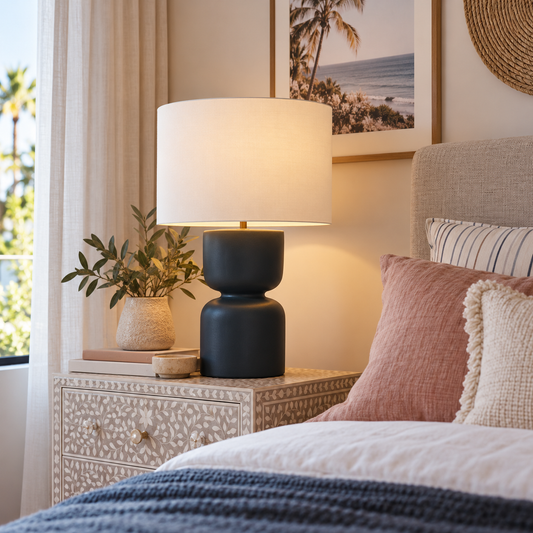
Bone inlay delivers a warm, matte surface with intricate patterns, hand-cut from ethically sourced camel bone and set into a resin base for genuine durability.
Bone resists scratching and handles everyday use without visible wear. It doesn't yellow or cloud over time, and develops a subtle patina that deepens with age, making older pieces more beautiful than new ones.
Each piece is hand-cut and individually placed, making bone inlay furniture genuinely bespoke. The Bone Inlay 4 Drawer Sideboard in Zelliges Black features an intricate Moroccan-inspired pattern handcrafted in Rajasthan, with a black resin base that creates dramatic contrast and brass-coloured legs.

Mother of pearl: luminosity and visual impact
Mother of pearl is iridescent, shifting colour with light and angle. It glows in direct sunlight and becomes subtle in dim lighting, making it ideal for statement pieces in rooms with varied lighting.
Mother of pearl is more delicate than bone, prone to chipping, and can fade with prolonged sunlight exposure. Humid climates require more frequent maintenance to prevent moisture damage.
Mother of pearl excels as accent pieces, mirrors, boxes, or small tables, where its luminosity commands attention and creates visual interest in neutral rooms.
Handcrafted bone inlay furniture: what sets artisanal pieces apart
Handcrafted pieces use traditional joinery and solid wood frames built to last generations, with hand-cut bone patterns using techniques refined over centuries in Rajasthan. Mass-produced alternatives use veneers and particle board that don't age well, veneers peel, particle board sags, and the difference becomes obvious within five years.
The Bone Inlay 9 Drawer Sideboard in Zelliges Grey (172cm wide) is built on an artisan-made wooden frame with traditional joinery, providing genuine storage and designed to be lived with for decades.
Choosing ethically sourced bone inlay supports artisan communities and sustainable practices directly.
Styling inlay furniture in modern interiors
Inlay furniture works across far more design aesthetics than many assume. The key is understanding how the piece's visual weight, pattern intensity, and colour interact with your existing décor and room proportions.
Design principles for placement
Position inlay furniture perpendicular to dominant architectural features (fireplaces, windows, shelving) to create visual balance without competing for attention.
In rooms without strong architectural anchors, position the inlay piece opposite the doorway as the primary focal point. Ensure adequate negative space and avoid symmetrical arrangements; instead, offset a single sculptural object or mirror to one side.
The piece should occupy no more than 60% of the wall width, leaving visual margin on either side. Measure your wall space before committing.
Placement tips for living and dining areas
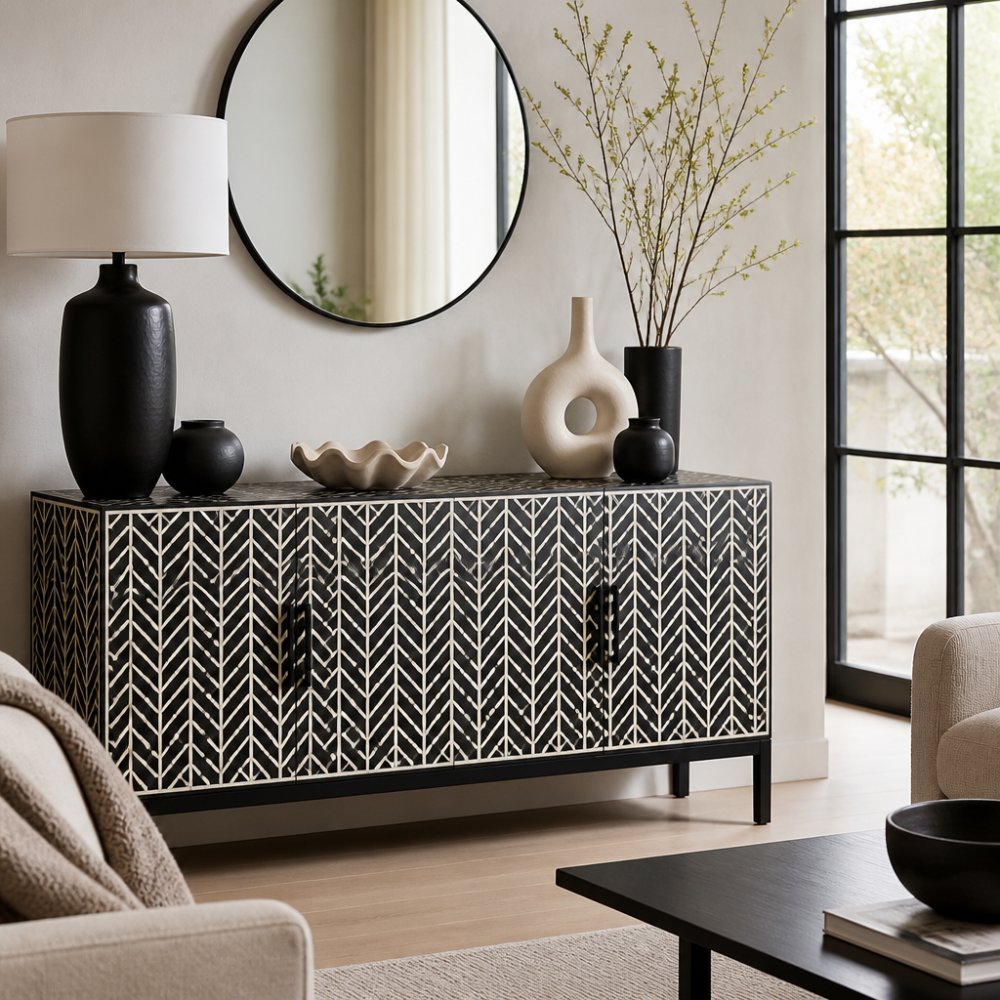
Position a statement sideboard opposite your seating area. Style the top surface sparingly with one sculptural object, a mirror, or a pair of lamps; cluttering it competes with the inlay pattern.
Choose patterns and colours that feel restful from your primary seating position. Black and white patterns are energising; grey or softer tones create calm. If your room contains bold artwork or textiles, choose understated inlay patterns to avoid visual saturation.
In dining areas, position a bone inlay sideboard opposite the dining table at eye level when seated (75-90cm from floor). Avoid direct sunlight; use sheer curtains to filter intense light or position on an adjacent wall.
For smaller spaces, a 160cm-wide four-door buffet provides substantial storage without overwhelming the room.
Bone Inlay 4 Drawer Sideboard →
Colour palettes and pattern matching
Black and white inlay pieces pair with virtually any colour scheme, warm earth tones, cool greys, soft whites, or jewel tones. Ensure the surrounding palette doesn't compete with the inlay's pattern intensity.
Keep wall colours soft and understated (warm white, soft grey, pale greige) to let the pattern command attention. Avoid patterned walls; solid colours frame the inlay as the primary pattern element.
Grey inlay pieces work beautifully with soft blues, warm whites, natural wood tones, and muted greens, creating a calming aesthetic without high visual contrast.
Let the inlay piece be the visual star. Keep surrounding décor restrained, solid-coloured walls, minimal artwork, and carefully curated accessories. Choose mirrors with simple frames in brass, wood, or black metal that echo the inlay's palette without competing.
Bone inlay furniture maintenance guide: care and longevity
Proper maintenance is what transforms a beautiful piece into a heirloom. The good news is that bone inlay requires far less fussing than many people expect.
Dust regularly with a soft microfibre cloth. For deeper cleaning, use a barely damp cloth and dry immediately. Never use abrasive cleaners, solvents, or furniture polish.
Avoid prolonged direct sunlight; use sheer curtains to filter intense light. Heat and UV exposure can cause the resin to fade or become brittle.
In humid climates, monitor for moisture and wipe away condensation immediately. Consider using a dehumidifier, particularly near the coast.
Clean drawer interiors occasionally and ensure hardware remains tightened. Brass-coloured hardware develops a natural patina over time, which adds character.
Bespoke inlay furniture design: customisation and investment value
Bespoke design lets you customise pattern, resin colour, dimensions, hardware finishes, and bone type, creating a genuinely unique piece perfectly proportioned for your room.
Budget-friendly alternatives and repair options
Understanding the full range of alternatives helps you choose based on durability, visual impact, and long-term value rather than price alone.
Material alternatives: durability and visual trade-offs
Dyed bone inlay uses hand-cutting techniques with individually dyed bone pieces set into a resin base. It retains 90% of natural bone's durability and ages similarly, though dyed colours can fade with prolonged UV exposure.
Repair and restoration: extending the life of inlay furniture
Damaged inlay furniture is often repairable rather than disposable, making restoration a cost-effective alternative to replacement. Understanding what can be fixed helps you decide whether a damaged piece is worth restoring.
Smaller inlay pieces as an entry point
Rather than investing in a large sideboard, consider starting with smaller inlay pieces: decorative boxes, mirrors, side tables, or console tables. These deliver the same aesthetic and craftsmanship at a fraction of the cost, typically 30-50% less than a full-sized sideboard. A small bone inlay mirror or box allows you to experience the material, understand how it ages in your space, and assess whether larger pieces suit your home before committing to a significant investment.
Conclusion
Choosing between bone and mother of pearl inlay furniture comes down to understanding what each material offers and how it fits your life. Bone delivers durability and warmth; mother of pearl creates luminosity and visual drama. Neither is objectively "better", the right choice depends on your space, your climate, and how you live.
Frequently Asked Questions
What exactly am I paying for when I choose handcrafted bone inlay furniture over mass-produced alternatives?
Handcrafted bone inlay furniture involves skilled artisans hand-cutting bone pieces and setting them individually into resin or wood bases using heritage techniques. Each piece is unique, with variations in pattern and finish that reflect its artisanal nature. You're paying for the labour-intensive process, ethically sourced materials, individual craftsmanship, and a timeless piece designed to last decades. Unlike mass-produced furniture made with synthetic inlays and machine cutting, handcrafted pieces develop character over time and can be repaired and restored.
How do I know if bone inlay furniture is actually ethically sourced?
Reputable makers of handcrafted bone inlay furniture Australia source materials directly from suppliers who document their practices. Look for brands that transparently share their sourcing story, including which artisan communities they work with and how materials are obtained. Ethical sourcing means bone comes from regulated suppliers, not endangered species, and artisans are paid fairly for their skilled labour. Choose makers who openly discuss their supply chain rather than those making vague claims.
What's the difference between bone inlay and mother of pearl inlay furniture?
Bone inlay uses hand-cut camel or cow bone set into resin or wood, offering warm, creamy tones and high durability. Mother of pearl uses shell fragments that create iridescent, luminous effects that shift with light. Bone inlay is generally more durable for high-traffic areas and easier to maintain, while mother of pearl delivers dramatic visual impact but requires more careful handling. Both are handcrafted and expensive.
How fragile is bone inlay furniture, and can it withstand everyday use with children and pets?
Bone inlay furniture is more durable than it appears. The bone pieces are set firmly into resin or wood frames using traditional joinery, making them resistant to normal household use. However, the resin base can scratch if dragged across rough surfaces, and direct sunlight can fade the finish over time. For households with young children or pets, place the piece away from high-traffic zones and use protective pads under the feet. Dust with a soft cloth regularly and avoid abrasive cleaners. With reasonable care, bone inlay furniture withstands daily living and can last generations.
What maintenance does bone inlay furniture require in a humid climate?
In humid environments, bone inlay furniture needs consistent care to prevent resin warping or moisture damage. Dust regularly with a soft, dry cloth to remove moisture before it settles. Avoid placing the piece near air conditioning vents or direct sunlight, which can cause uneven drying and warping. Use a dehumidifier if your home stays very damp. Never use water or liquid cleaners on bone inlay; instead, wipe with a barely damp cloth and dry immediately. Store any spare items inside drawers in airtight containers to protect them from humidity.