
How to Clean and Maintain Bone Inlay Decor: 2026 Guide

Table of Contents
- Tools and Materials You'll Need to Care for Bone Inlay Decor
- Daily Dusting and Gentle Wiping for Intricate Inlay Patterns
- How to Remove Stains from Bone Inlay Without Causing Damage
- Cleaning Mother of Pearl Inlay: Protecting the Shimmer
- The Best Wax for Bone Inlay Furniture and How Often to Apply It
- Preventing Moisture Damage and Climate-Specific Care for Bone Inlay Decor
- Long-Term Restoration and Repair for Handcrafted Inlay Pieces
- Frequently Asked Questions
Last Updated: September 27, 2026
Tools and Materials You'll Need to Care for Bone Inlay Decor
Caring for bone inlay decor starts with the right kit, not the most expensive one. Four simple tools do almost all the work. You need a soft microfiber cloth, a second cloth for drying, a mild soap solution, and a soft-bristled brush for the grooves.
- Two microfiber cloths - one damp, one dry
- Mild soap solution - a few drops of gentle soap in warm water
- Soft-bristled brush - a clean makeup brush works well
- Non-abrasive cleaner - only for stubborn stains, never daily use
- Furniture wax - for the wooden base and surrounding surfaces
Daily Dusting and Gentle Wiping for Intricate Inlay Patterns
Dust is the quiet enemy of bone inlay decor. Left alone, surface dust settles into the grooves and mixes with oils from the air to form grime buildup that hardens. A daily once-over takes under a minute and prevents most of the deep cleaning you would otherwise need.

Reaching Dust in Deep Inlay Grooves
A dry cloth cannot reach the base of deep grooves, so use a soft-bristled brush once a week. Move the brush along the pattern rather than across it. This lifts trapped dust without scratching the resin or the bone.
How to Remove Stains from Bone Inlay Without Causing Damage
Most stains lift with a mild soap solution and patience. Mix a few drops of gentle soap into warm water, dampen a microfiber cloth, and wipe the mark using light pressure. Dry the area straight away with a clean cloth.
For spill removal, act fast:
- Blot the spill with a dry cloth - never rub
- Dampen a second cloth with mild soap solution
- Wipe along the grain and inlay pattern
- Dry immediately with a clean cloth
- Let the surface air for ten minutes before styling
Cleaning Mother of Pearl Inlay: Protecting the Shimmer
Mother of pearl is softer than bone and loses its shine faster when handled roughly. Cleaning mother of pearl inlay is really about restraint. Use only a damp cloth and mild soap solution, and never let water sit on the surface.
The Best Wax for Bone Inlay Furniture and How Often to Apply It
The best wax for bone inlay furniture is a clear, solvent-free furniture wax with no added colour or silicone. Coloured waxes stain pale bone, and silicone-based products build up a film that traps dust and dulls the surface over time.
| Task | Frequency | Tool |
|---|---|---|
| Dusting | Daily | Dry microfiber cloth |
| Groove cleaning | Weekly | Soft-bristled brush |
| Damp wipe | Weekly | Damp cloth, then dry |
| Waxing the wooden base | Every 3-4 months | Clear furniture wax |
| Full inspection | Twice a year | Eyes and hands |
Preventing Moisture Damage and Climate-Specific Care for Bone Inlay Decor
Moisture damage is the leading cause of long-term problems in handcrafted inlay pieces. Water swells the wooden base, and once the base moves, the resin and bone lift away from it. Keeping the surface dry is the single most important habit you can build, but the bigger risk is not spills, it is the humidity in the air around the piece.
How Humidity Actually Affects Bone Inlay
Wood is hygroscopic: it absorbs and releases moisture from the air until it reaches equilibrium with its surroundings. Bone and mother of pearl are far less responsive to humidity than wood, and resin sits somewhere in between. When the wood base swells or shrinks, the inlay does not move with it at the same rate. The result is stress at the bond line.
Climate-Specific Strategies
Humid and coastal climates. The risk here is sustained high humidity, not short spikes. Run a dehumidifier in the room where the piece lives, aiming for the 40-60% band. Avoid placing pieces against external walls, which stay cooler and condense moisture. In the wettest months, a small moisture absorber near large pieces is cheap insurance. Check the underside of furniture twice a year for swelling or soft spots.
Practical Habits That Work in Any Climate
- Keep pieces out of direct sunlight to prevent fading and drying
- Use coasters and felt pads under anything placed on the surface
- Wipe up spills within minutes, not hours
- Move pieces away from air vents and radiators
- Check the underside of furniture twice a year for swelling
- Avoid placing pieces directly on concrete or stone floors, which wick moisture
What to Do If Moisture Damage Has Already Started
White water marks on the wood surface are the earliest sign. These are moisture trapped in the finish, not the wood itself, and often lift with a dry cloth and gentle warmth, never a hair dryer, which can crack the finish. Dark marks mean moisture has reached the wood and stained it; these usually need a restorer. If the inlay itself feels loose after a moisture event, stop using the piece and let it dry slowly at room temperature for a week before assessing.
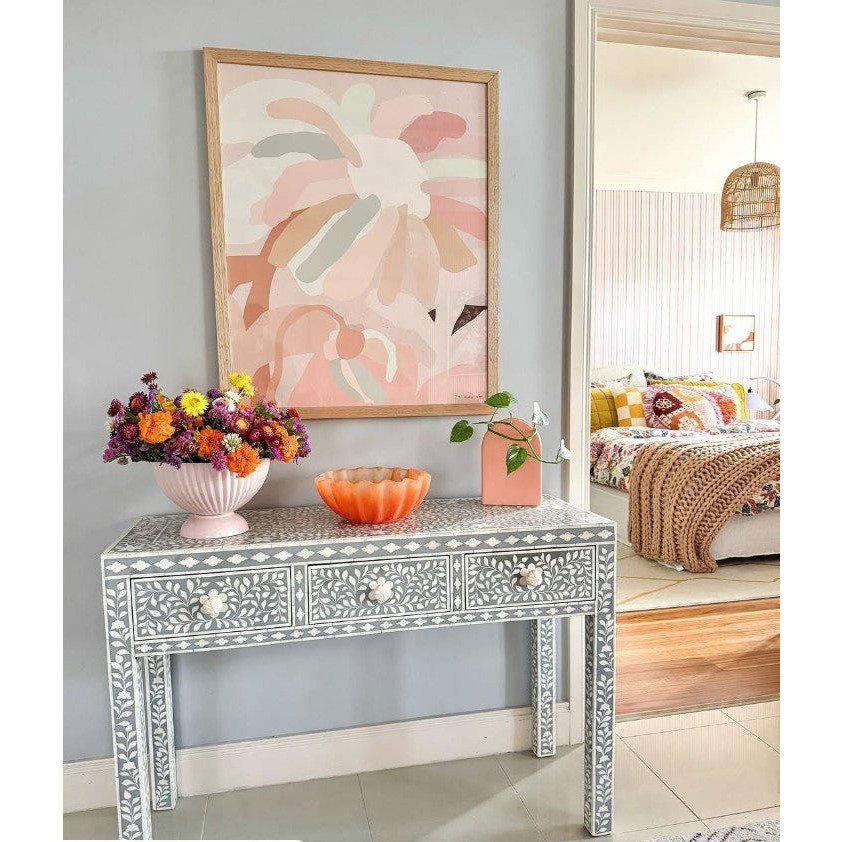
Bone Inlay Console : Floral : Grey →
Long-Term Restoration and Repair for Handcrafted Inlay Pieces
Restoration is not the same as cleaning, and most pieces never need it if care is consistent. When damage does appear, the right response depends on what has failed. Understanding the failure modes helps you decide whether to intervene at home or hand the piece to a specialist.
The Three Failure Modes of Bone Inlay
Almost every restoration job traces back to one of three mechanisms:
- Resin failure, the resin that beds each bone or mother of pearl segment dries, shrinks, or cracks. Segments lift at the edges and eventually detach. This is the most common failure and the easiest to arrest early.
- Substrate movement, the wooden base swells, shrinks, or warps with humidity swings. As the base moves, the inlay pattern no longer sits flush, and hairline gaps open around segments.
- Surface degradation, the bone yellows, the mother of pearl clouds, or the wood finish dulls. This is cosmetic rather than structural, but it is the hardest to reverse because it involves the material itself, not the bond.
What You Can Safely Do at Home
Home intervention should be limited to stabilisation, not repair. Two actions are safe for most owners:
- Re-seating a lifted segment with gentle pressure. If a bone piece rocks under light finger pressure but is still attached, press it flat and hold for a few seconds. If it stays, leave it. If it springs back, stop, the resin has failed and pressure will not fix it.
- Documenting the damage. Photograph the affected area with a ruler or coin for scale, note the date, and record any recent humidity or temperature events. This record helps a restorer diagnose the cause rather than just the symptom.
What a Professional Restorer Actually Does
A restorer's first step is diagnosis, not repair. They will check the substrate for movement, test the resin for brittleness, and assess whether the damage is active or stable. Only then do they choose a treatment:
- Re-seating, lifting the segment, cleaning the old resin from both surfaces, and re-bedding with a matching resin. This is a same-day job for a small area.
- Segment replacement, carving a new bone or mother of pearl piece to match the pattern. This is the most time-consuming option and depends on finding material with a close colour and grain match.
- Substrate stabilisation, clamping, filling, or in severe cases replacing sections of the wooden base before the inlay is re-seated.
- Surface refinishing, only for the wooden base. Bone and mother of pearl are never sanded or refinished; the surface is the material.
Signs a Piece Needs Professional Attention
- Inlay sections that lift or move under light pressure
- White or dark water marks that will not lift with gentle cleaning
- Cracks in the wooden base or around drawer joints
- Cloudy patches on mother of pearl that do not respond to a damp cloth
- Missing or broken pattern sections
- A pattern that no longer sits flush with the surrounding surface
Prevention Beats Restoration
Every restoration job is a failure of prevention. The habits that matter most are the ones that keep the substrate stable: steady indoor humidity, no direct sun, no standing water, and prompt spill response. A piece that never experiences a humidity swing of more than about 10% relative humidity is unlikely to need structural restoration in its first few decades.
Frequently Asked Questions
How do you remove dust from intricate bone inlay patterns?
Use a dry microfiber cloth to wipe the surface gently. For deep grooves, a soft-bristled brush or vacuum with a brush attachment on low suction works well. Avoid pressing hard, as the inlay can chip. Dust weekly to prevent grime buildup, which dulls the resin and bone. A consistent routine keeps your bone inlay decor looking crisp without harsh chemicals.
Can I use furniture polish on bone inlay?
No. Most furniture polishes contain silicones or oils that can seep into the resin and bone, causing discolouration or a sticky film. Instead, use a mild soap solution for cleaning and a quality wax for protection. For best wax for bone inlay furniture, choose a natural beeswax or carnauba-based product free from petroleum distillates. Always test on a small area first.
How often should I wax bone inlay furniture?
Apply a thin coat of wax every three to six months, depending on humidity and use. In dry climates, waxing twice a year is sufficient; in humid areas, you may need to wax quarterly to seal the surface. Regular waxing protects the wooden base and keeps the inlay from drying out. Always dust and clean before waxing to avoid trapping dirt.
What should I avoid when cleaning mother of pearl and bone inlay?
Avoid abrasive cleaners, vinegar, ammonia, and alcohol-based products, as they can etch the mother of pearl and dull the bone. Never soak the piece or use excessive water; moisture damage can warp the wooden base. Also skip ultrasonic cleaners. For cleaning mother of pearl inlay, stick to a barely damp cloth with mild soap, then dry immediately.
Bone inlay decor rewards consistency more than effort. A minute of dusting each day, a weekly wipe, and a thin coat of wax every few months will keep a handcrafted piece looking new for years. When you want furniture made to be looked after rather than replaced, Mahlia Interiors offers individually handcrafted pieces, custom inlay design services, and 100% ethically sourced materials. Shop our new arrivals and find a piece worth caring for.